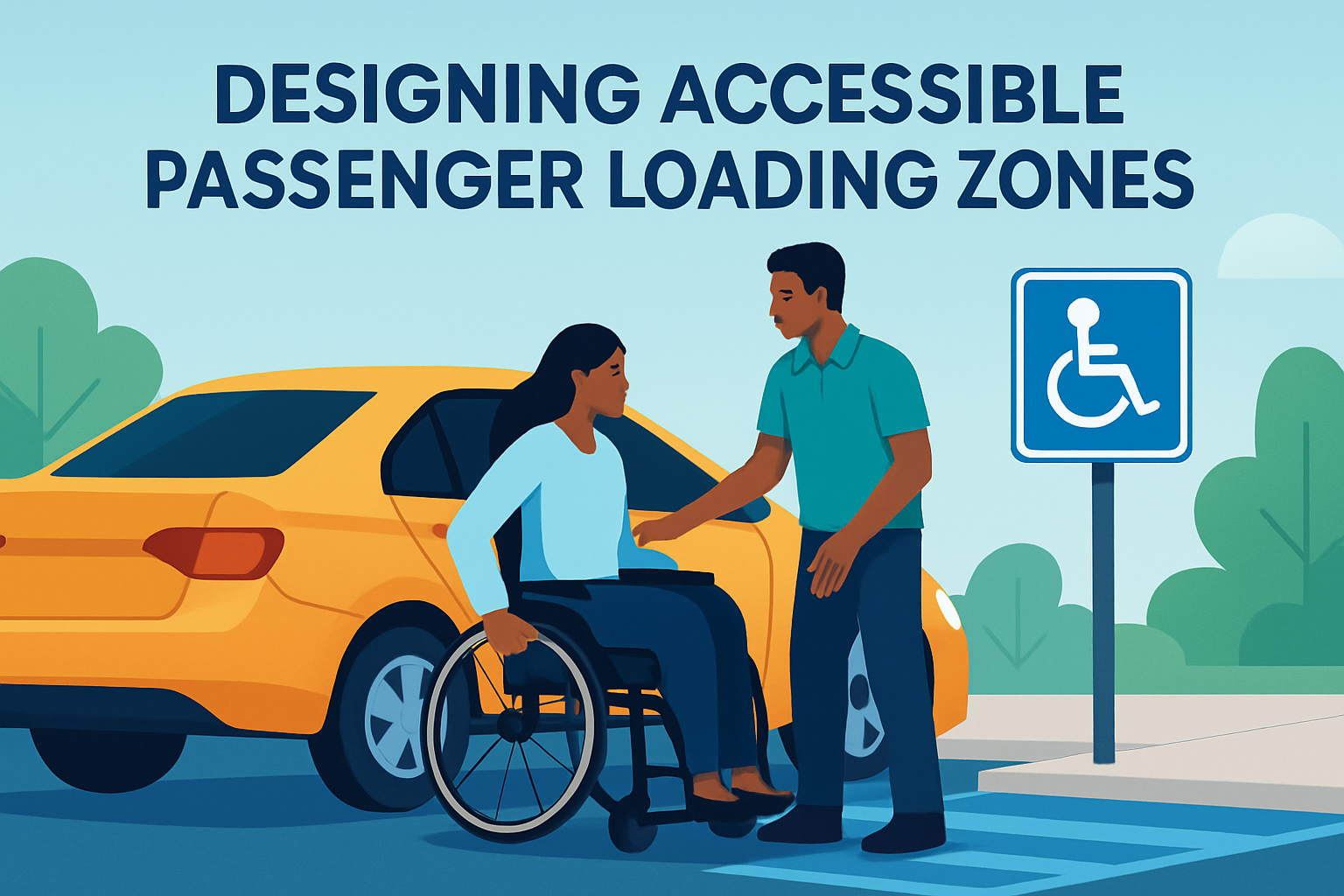
In today’s world, accessibility is more than just a consideration—it’s a necessity. One aspect of accessibility that is often discussed is van-accessible parking spaces. These designated parking spots are crucial to ensure that people with mobility challenges, especially those requiring the use of a wheelchair-accessible van, can access public spaces with ease and dignity. But what exactly are van-accessible parking spaces, and why do they matter? This article aims to shed light on the standards governing these parking spaces, defining key terms and explaining their importance in ensuring inclusivity for all.
A van-accessible parking space is a parking spot specifically designed to accommodate vans equipped with wheelchair ramps or lifts. These spaces are wider than regular parking spots and include additional space on the side to allow for the deployment of a wheelchair ramp. The Americans with Disabilities Act (ADA) outlines specific standards for van-accessible parking spaces to ensure they meet the needs of individuals using mobility devices. This matters because providing adequate van-accessible parking spaces is not only a legal requirement but also a moral one—to ensure that all individuals can participate fully in society without facing unnecessary barriers.
Understanding the Dimensions of Van-Accessible Parking Spaces
The first aspect of van-accessible parking spaces that needs to be understood is the dimensions. According to ADA standards, a van-accessible parking space must be at least 132 inches wide, with an access aisle adjacent to it that is at least 60 inches wide. This aisle can be located on either side of the parking space to accommodate vans equipped with ramps or lifts on either side. This space is critical because it allows individuals who use wheelchairs to have enough room to exit and enter their vehicles comfortably.
Consider, for instance, a shopping mall setting. The management team understands that not all customers are able-bodied, and to cater to those using wheelchair-accessible vans, they ensure that each entrance has at least two van-accessible parking spaces. By providing the required dimensions, these spaces allow for the safe and easy transition of customers from their vehicles to the mall entrance. Without adequate dimensions, individuals may find themselves unable to use their ramps or lifts properly, causing unnecessary inconvenience and potentially endangering their safety.
The Importance of Proper Signage for Van-Accessible Parking
Signage is another critical component of van-accessible parking spaces. The ADA mandates that these spaces be clearly marked with signage that includes the International Symbol of Accessibility. Additionally, the sign must also have text stating “Van Accessible” to make it clear that the space is designed specifically for vans with wheelchair ramps or lifts. This distinction is important because it helps to prevent misuse of these spaces by vehicles not equipped to transport individuals with wheelchairs.
For example, in a busy urban hospital setting, the parking lot serves hundreds of patients and visitors daily. Clear signage helps ensure that the van-accessible parking spaces are used by those who truly need them. Without these signs, it would be easy for able-bodied individuals to inadvertently use these spaces, depriving a person with significant mobility challenges of the convenient access they need.
Location and Accessibility: Key Considerations
Strategic location of van-accessible parking spaces is crucial to their effectiveness. These spaces should be located as close as possible to accessible entrances of the facility they serve to minimize the distance and potential obstacles individuals face when navigating to the entrance. Additionally, the path from the parking space to the entrance must be clear of any potential hazards and be built to accommodate wheelchairs and mobility aids, with the route having a stable, firm, and slip-resistant surface.
An illustrative example can be seen in the design of parking facilities at a university campus. By situating van-accessible parking spaces in proximity to building entrances and ensuring a seamless path of travel free from barriers and elevation changes, universities make their campuses inclusive and welcoming for all students and staff. This makes it feasible for individuals with mobility impairments to participate in academic and extracurricular activities alongside their peers.
| Requirement | Details |
|---|---|
| Minimum Parking Space Width | 132 inches |
| Minimum Access Aisle Width | 60 inches |
| Signage | International Symbol of Accessibility + “Van Accessible” text |
| Location | Closest to accessible entrances |
Enforcement and Compliance: Ensuring Adherence to Standards
Understanding and establishing standards is one thing, but enforcing and ensuring compliance is another. The role of local municipal authorities, property owners, and organizations is integral in this process. Building codes and regular inspections are mechanisms that help enforce compliance. Non-compliance can result in significant penalties, including fines and the loss of licenses to operate.
Take, for instance, a municipal government that routinely inspects local commercial properties for ADA compliance. By conducting these inspections, they ensure that businesses maintain the required number of van-accessible parking spaces and that these spaces meet all established standards. Such enforcement measures not only uphold the law but also promote social justice by ensuring equitable access to all citizens, regardless of physical ability.
Real-World Impact: Stories of Accessibility Success and Challenges
Exploring real-world examples can highlight the impact of van-accessible parking spaces on everyday lives. Consider the story of a local homeowner’s association in a suburban neighborhood that rebuilt its community center from the ground up with accessibility in mind. By integrating van-accessible parking spaces into the design, they ensured all residents, including those with disabilities, could access community events and activities. On the flip side, challenges arise when spaces fall short of compliance, leading to frustration and limited access for members of the community.
Another story comes from a small-town post office that initially had no van-accessible space due to oversight. After receiving feedback from residents, they quickly acted to create appropriate parking. The result was a more inclusive environment that allowed all community members to access essential services comfortably. These narratives underscore the importance of continuously striving to improve accessibility in both public and private spaces.
Innovations and Future Trends in Accessible Parking
As we move toward a more inclusive future, innovations in accessible parking are gaining traction. Technologies such as smart parking systems equipped with sensors and mobile applications now offer real-time updates on the availability of accessible parking spaces. This can significantly reduce the time individuals spend searching for a proper parking spot, enhancing convenience and accessibility.
For instance, a tech startup focuses on creating an app that is connected to city parking meters and sensors in each accessible space to provide live updates to users about space availability. Such technology is not only cutting-edge but holds the promise of revolutionizing the way individuals with disabilities navigate public spaces, making independence and accessibility seamless.
Conclusion: The Ongoing Journey Toward Accessibility
The standards for van-accessible parking spaces play a vital role in building an inclusive society. By understanding the dimensions, signage, and location criteria, enforcing compliance, and embracing innovations, we are on the path to ensuring equal participation for everyone. The stories of both successes and challenges serve as powerful reminders of the impact accessible parking can have on daily lives.
For property owners, facility managers, and policymakers, the key takeaway is clear: accessible design is not merely about meeting legal obligations, but about fostering a community where inclusivity is the norm. Investing in accessibility is investing in people—and ultimately, that’s the most important investment we can make.
As a call to action, let’s all commit to learning more about accessibility standards, advocating for changes where necessary, and supporting those who strive for inclusivity. Whether by building or supporting technology that aids accessibility, participating in community forums, or simply spreading awareness, each action brings us closer to a world where everyone has equal access.
Frequently Asked Questions
1. What are van-accessible parking spaces, and why are they important?
Van-accessible parking spaces are specially designated parking zones designed to accommodate vehicles equipped for transporting individuals with mobility challenges, particularly those relying on wheelchairs. Typically more expansive than standard parking spots, van-accessible spaces feature additional width to facilitate the use of wheelchair lifts or ramps. They also boast adjacent access aisles, which are crucial in providing sufficient space for the deployment of these mobility aids.
The importance of van-accessible parking spaces cannot be overstated. They are vital in ensuring that individuals who use wheelchair-accessible vans can exit and enter their vehicles safely and conveniently. By promoting ease and dignity in accessibility, these spaces help level the playing field, making all public and private spaces more inclusive. Imagine a scenario where a wheelchair user arrives at a public event only to find no accessible parking—this can lead to stress, inconvenience, and potential safety hazards.
Furthermore, the importance extends to complying with laws and regulations, like the Americans with Disabilities Act (ADA) in the United States, which sets forth specific standards for accessible parking. By adhering to these standards, establishments demonstrate their commitment to inclusivity and attention to the needs of all individuals, paving the way for a more accommodating and respectful society.
2. What are the specific dimensions required for a van-accessible parking space?
The dimensions for van-accessible parking spaces are dictated by standards that ensure they meet the needs of individuals using wheelchair-accessible vehicles. According to the Americans with Disabilities Act (ADA), a van-accessible parking space must be at least 132 inches wide, with an access aisle that is a minimum of 60 inches wide. Alternatively, a space that is 96 inches wide can be used if the access aisle is expanded to 96 inches, providing the option to accommodate each environment’s specific constraints.
The access aisle is crucial as it provides sufficient space for deploying equipment such as wheelchair lifts or ramps. It’s usually marked with diagonal stripes to avoid parking mistakes, ensuring the access aisle remains unobstructed. These spaces must also have a vertical clearance of at least 98 inches, allowing unobstructed access for taller vehicles outfitted with lifts or ramps.
This careful designation of space accommodates the operational needs of both the vehicle and the individual, ensuring that the accessibility elements work seamlessly to allow safe and autonomous access to facilities.
3. How many van-accessible parking spaces are required in a parking lot?
The number of van-accessible parking spaces required in a parking lot varies based on the total number of parking spots available. According to ADA requirements, for every six accessible parking spaces, at least one must be van-accessible. The table that provides a guideline is as follows:
- 1-25 spaces: At least 1 van-accessible space
- 26-50 spaces: At least 2 accessible spaces, with 1 being van-accessible
- 51-75 spaces: At least 3 accessible spaces, with 1 being van-accessible
- 76-100 spaces: At least 4 accessible spaces, with 1 being van-accessible
- 101-150 spaces: At least 5 accessible spaces, with 1 being van-accessible
As the number of total parking spots increases, so does the requirement for accessible spaces, scaling proportionately to ensure that accessibility is maintained across all facilities, large and small.
This proportionate allocation is critical to making sure that individuals using wheelchairs or mobility aids have equal access to spaces without having to compete or struggle for available spots, fostering an environment of inclusivity and respect.
4. What signage should be used for van-accessible parking spaces?
Proper signage is essential for van-accessible parking spaces, as it informs all parking lot users, including those needing these spaces and others who may inadvertently occupy them. ADA regulations require that van-accessible spaces display signs that bear the International Symbol of Accessibility—a figure in a wheelchair displayed against a blue background. This symbol is universally recognized and clearly communicates that the space is designated for individuals with disabilities.
Additionally, the sign should also include the words “Van Accessible.” This specification is important because it distinguishes the space from a standard accessible parking spot, highlighting the additional requirements and prohibiting misuse by those not using a van with a lift or ramp.
Furthermore, the sign should be mounted at a height that allows for easy visibility, typically no lower than five feet above the ground. This ensures that even when a vehicle is parked in the space, the sign can be seen, reinforcing the parking designation and deterring unauthorized use. Meeting these signage requirements not only aligns with legal standards but also emphasizes the importance of accessible parking for those who rely on them.
5. What can happen if a facility does not comply with van-accessible parking standards?
Non-compliance with van-accessible parking standards can lead to several repercussions for a facility. On a legal level, facilities face potential penalties and fines for failing to adhere to mandates such as the ADA in the United States. Lawsuits may be filed by individuals who are unable to access necessary spaces, leading to financial and reputational damage for the establishment.
Beyond legal consequences, non-compliance poses significant challenges for individuals with disabilities. It results in limited access to essential services and amenities and can make simple tasks, like visiting a store or attending an event, incredibly burdensome or even impossible.
Moreover, a lack of accessible parking reflects negatively on a facility’s commitment to inclusivity and accessibility. This can lead to a perception among the community, clients, or customers that the business or entity does not prioritize or respect all patrons’ needs. In today’s society, where awareness and advocacy for accessibility are increasing, such a reputation can have far-reaching consequences beyond immediate legal penalties.
Ensuring compliance with van-accessible parking standards affirms a facility’s dedication to inclusiveness, social responsibility, and abiding by legal mandates designed to protect and empower all individuals.