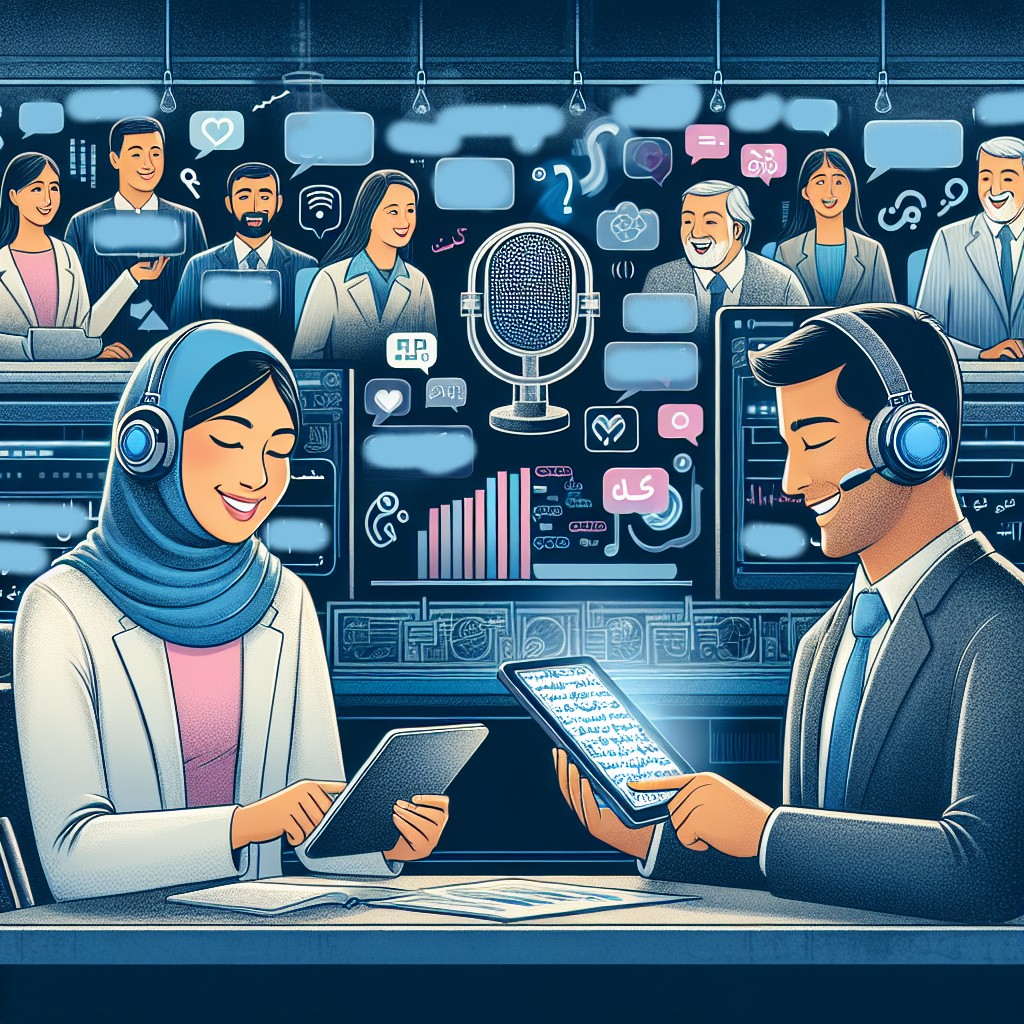
The Americans with Disabilities Act (ADA) stands as a monumental piece of legislation aimed at prohibiting discrimination against individuals with disabilities. Since its enactment in 1990, the ADA has propelled significant strides in creating accessible environments across various sectors, including but not limited to public facilities, employment, transportation, and communication. With the continuous advancement of technology, the scope of accessibility has been broadened, leading to more inclusive communities. One such technological innovation that has made a significant impact is speech-to-text (STT) technology. This article explores the importance of STT solutions, their applications, and how they contribute to accessibility and inclusivity.
Speech-to-text technology, also known as automatic speech recognition (ASR), converts spoken language into written text. Initially developed for dictation purposes, STT technology has significantly evolved, incorporating advanced algorithms and machine learning techniques to enhance accuracy and efficiency. Today, it has become an essential tool for individuals with disabilities, promoting better communication, accessibility, and integration within society.
The Importance of Speech-to-Text Solutions
Speech-to-text technology holds paramount importance in addressing communication barriers faced by individuals with disabilities, particularly those who are deaf or hard of hearing. For these individuals, traditional communication methods can be restrictive, often leading to difficulties in accessing information, participating in conversations, and pursuing educational or career opportunities. STT solutions, however, offer an effective remedy by providing real-time transcription services that convert spoken words into legible text.
Moreover, STT technology is not limited to individuals with hearing impairments. It also benefits those with physical disabilities that affect their ability to write or type, as well as individuals with cognitive disabilities that make processing spoken language challenging. By offering an alternative means of communication, STT technology fosters inclusivity, enabling individuals with diverse needs to actively engage in daily activities, educational settings, and professional environments.
Applications of Speech-to-Text Technology
Speech-to-text solutions are employed across various platforms and settings, enhancing accessibility in numerous ways. In educational environments, STT technology facilitates inclusivity by providing real-time transcription of lectures, discussions, and multimedia content. This ensures that students with disabilities have equal access to information and can actively participate in classroom activities.
In professional settings, STT technology enables effective communication during meetings, conferences, and collaborative projects. It allows individuals with hearing or speech impairments to contribute meaningfully, access important information, and engage in professional interactions. Furthermore, STT solutions streamline workflow by transcribing voice notes, generating written documents, and facilitating communication with clients or colleagues.
Additionally, STT technology is integrated into digital platforms such as websites, mobile applications, and virtual assistants. This integration enhances accessibility for individuals who rely on assistive technologies, ensuring they can navigate digital landscapes seamlessly. From transcription services for video content to voice-command features on smartphones, STT technology revolutionizes how individuals with disabilities interact with digital information and services.
Impact on Accessibility and Inclusivity
The impact of speech-to-text solutions on accessibility and inclusivity is profound. By breaking down communication barriers, STT technology fosters a more inclusive society where individuals with disabilities can actively participate in various aspects of life. The real-time transcription capabilities provide immediate access to information, allowing individuals to stay informed, engaged, and connected.
Furthermore, STT technology promotes equitable opportunities in education and employment. Students with disabilities can pursue academic excellence without limitations, receiving real-time transcripts that complement their learning styles. In the workplace, employees with disabilities can contribute effectively, stay informed, and collaborate seamlessly with their colleagues.
Beyond education and employment, STT solutions enhance social interactions and independent living. Individuals with disabilities can engage in conversations, access entertainment, and perform daily activities with greater ease. The seamless integration of STT technology into everyday life promotes inclusivity, ensuring that individuals with disabilities can lead fulfilling lives and participate fully in society.
Challenges and Considerations
While speech-to-text technology presents significant benefits, it is important to acknowledge the challenges and considerations associated with its implementation. One challenge is the accuracy and reliability of the technology in diverse settings. Background noise, accents, and speech patterns can affect the accuracy of transcriptions, potentially leading to misunderstandings or information gaps.
Additionally, the cost of implementing STT solutions can be a consideration, particularly for educational institutions and small businesses. Ensuring access to affordable and high-quality STT technology is crucial to promoting widespread adoption and inclusivity.
Privacy and data security are also important considerations. As STT technology processes spoken language, it may involve sensitive or confidential information. Implementing robust security measures to protect user data is essential to maintaining trust and ensuring the technology’s responsible use.
Future Prospects and Innovations
The future prospects of speech-to-text technology are promising, with ongoing innovations aimed at improving accuracy, accessibility, and user experience. Machine learning and artificial intelligence (AI) continue to play a pivotal role in enhancing STT algorithms, enabling more precise transcriptions and accommodating diverse accents and speech patterns.
Moreover, advancements in natural language processing (NLP) are expected to enhance the contextual understanding of speech, allowing STT technology to generate more accurate and meaningful transcriptions. This will further reduce communication barriers and enhance user experience across various settings.
Integration with other assistive technologies is also on the horizon. Combining STT technology with real-time translation services, for example, can break down language barriers, making communication more inclusive for individuals who speak different languages. This integration would greatly benefit multicultural and multilingual communities.
Conclusion
The Americans with Disabilities Act has laid the groundwork for creating inclusive environments that empower individuals with disabilities to lead fulfilling lives. Speech-to-text technology is a remarkable embodiment of this vision, transforming communication, accessibility, and inclusivity for individuals with diverse needs. By providing real-time transcriptions and alternative means of communication, STT solutions break down barriers and foster a more inclusive society.
As technology continues to evolve, the potential of speech-to-text technology to further enhance accessibility and inclusivity is boundless. Continued investments in research, development, and implementation will ensure that STT solutions remain a cornerstone of accessible communication. By embracing these innovations, we can pave the way for a future where individuals with disabilities can thrive, contribute, and participate fully in all aspects of life, realizing the true spirit of the Americans with Disabilities Act.
Frequently Asked Questions
1. What are speech-to-text solutions and how do they enhance accessibility?
Speech-to-text solutions transform spoken language into written text. This technology is crucial in enhancing accessibility, particularly for individuals with hearing impairments. By converting audio dialogues, announcements, or any spoken content into text, individuals who are deaf or hard of hearing can access information in real-time or afterwards if captioned. This advancement aligns with the principles of the Americans with Disabilities Act (ADA), underscoring the right for all individuals to access communication and information equally.
Additionally, speech-to-text solutions help those with learning disabilities or those who process written information better than auditory information. By providing a textual representation, speech-to-text helps individuals retain and understand information in a format that’s most effective for them. This inclusivity ensures broader participation in different spheres such as education and work, empowering individuals to engage and contribute without any communication barriers.
2. How do speech-to-text solutions impact inclusivity in educational settings?
In educational settings, speech-to-text facilities ensure all students receive equitable access to information. This technology transforms lecture content into text formats, making educational materials accessible to students with hearing impairments. Furthermore, students with dyslexia or other language processing disorders often benefit from having audio information presented in text form, allowing them to study at their own pace and improve comprehension.
Beyond accessibility, these tools foster inclusivity by leveling the playing field in classrooms. No student is left behind because of how content is delivered. Educators find speech-to-text supports diverse learners, allowing them to provide tailored assistance and inclusive teaching methods. This not only enriches the learning experience but also encourages collaboration and understanding among diverse student groups, strengthening the academic community as a whole.
3. Can speech-to-text technologies aid in the workplace for those with disabilities?
Absolutely, speech-to-text technology significantly aids workplace productivity and inclusivity for employees with disabilities. It plays a pivotal role in communication, allowing employees with hearing impairments to actively participate in meetings and discussions through real-time transcription services. It also benefits employees who have difficulty with writing due to physical disabilities, enabling them to speak their thoughts and have them accurately transcribed into text, enhancing productivity.
Moreover, these solutions support employers in adhering to ADA workplace regulations by providing necessary accommodations that facilitate communication and information exchange. Employers who implement these technologies cultivate an inclusive work environment where everyone, regardless of their abilities, has an equal opportunity to succeed. Thus, speech-to-text not only fulfills legal obligations but also promotes a culture of diversity and inclusion within the workplace.
4. What are some challenges associated with implementing speech-to-text solutions?
One primary challenge is the accuracy of the transcription, which can be affected by varying speech patterns, accents, and background noise. For effective deployment, it’s crucial to choose sophisticated software that can handle these variables or provide training to ensure high accuracy. Another issue is the integration of these solutions into existing systems, as it may require technical support and adjustments to ensure compatibility without disrupting current workflows.
Cost is also a consideration. Implementing high-quality speech-to-text solutions can be expensive, especially for small organizations or institutions. However, many see this investment as necessary to meet ADA compliance and foster an inclusive environment. Training for staff and users is essential to maximize the technology’s benefits, which also represents an additional resource commitment.
Overcoming these challenges often involves collaborating with technology providers who offer comprehensive support, ensuring that the systems are tailored to meet specific needs and environments. The shift towards speech-to-text not only addresses legal compliance but also enhances overall operational efficiency and inclusivity.
5. How do advancements in AI influence the effectiveness of speech-to-text solutions?
Advancements in artificial intelligence (AI) have dramatically increased the effectiveness and scope of speech-to-text solutions. Machine learning algorithms can now better understand and process different accents, speech speeds, and even recognize contextual nuances, improving the accuracy of transcriptions. This makes real-time transcription more reliable and accessible for users with diverse linguistic backgrounds or speech patterns.
AI-driven speech-to-text systems also learn over time, continuously improving their performance based on user interactions and feedback. Additionally, AI technology can integrate with voice assistants and other smart devices, offering seamless accessibility across different platforms. These advancements reduce barriers for individuals with disabilities, making information and communication more readily accessible, regardless of the environment.
The continuous refinement of AI in this field means that as these technologies become more embedded in daily life, accessibility expands, helping bridge the gap between individuals of different abilities and enabling broader societal inclusion.