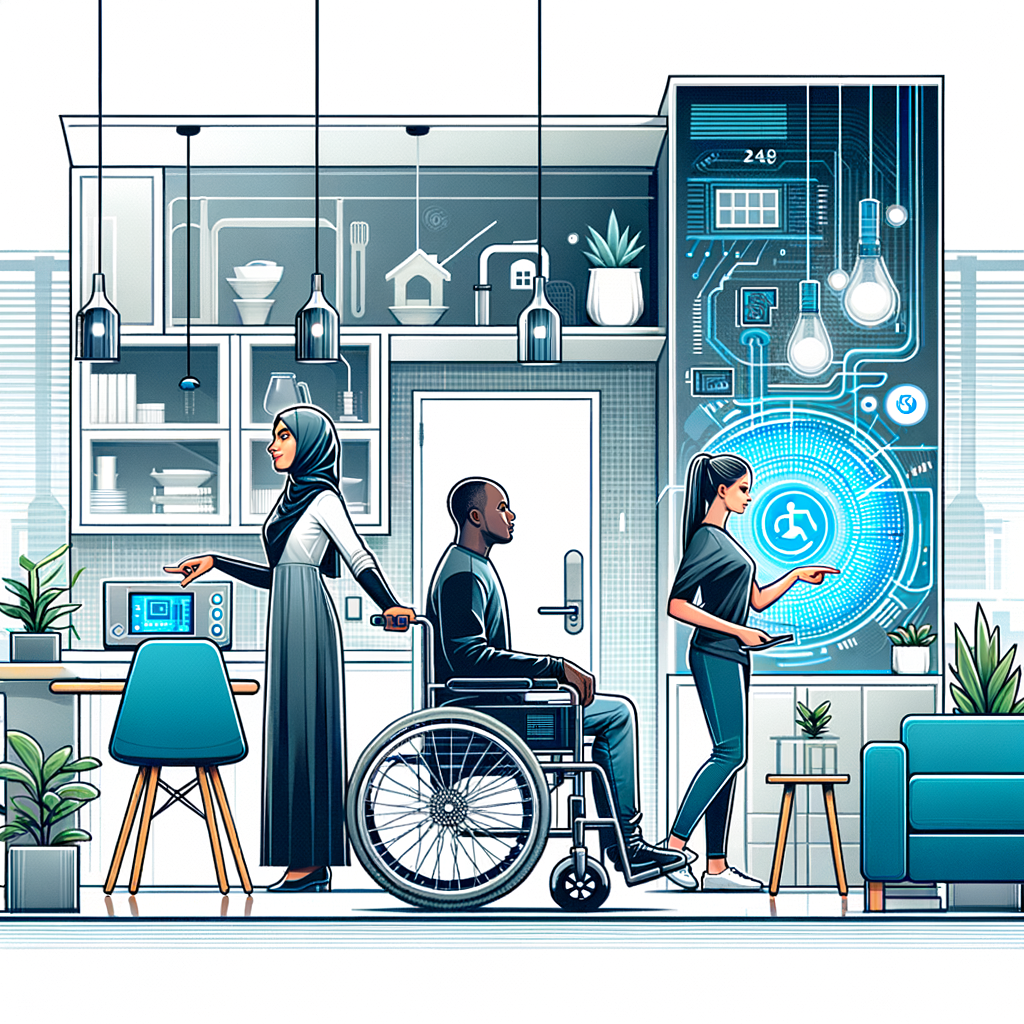
In a rapidly evolving world, technology continues to reshape our daily lives, making even the most mundane aspects of living more efficient and convenient. Among the many technological advancements, smart homes have emerged as a revolutionary way to enhance our day-to-day experiences, offering improved accessibility and functionality. These cutting-edge innovations are not just futuristic fantasies; they are already transforming how we interact with our domestic environments. From automated lighting and climate control to intelligent security systems and personalized health management, smart homes promise incredible accessibility benefits for everyone, including individuals with disabilities and the elderly. The future is not only bright but also inclusive. In this article, we explore how smart homes are set to leverage the potential of cutting-edge technologies, making home living more accessible, comfortable, and tailored to the unique needs of every individual.
The Rise of Smart Home Technology
The concept of a smart home revolves around the integration of technology and connectivity to automate and control household activities. This vision is realized through the Internet of Things (IoT), which involves a network of devices connected to the internet, enabling them to communicate and perform tasks independently or with minimal human intervention. As IoT devices become more affordable and widely available, the smart home market is expanding rapidly. Recent innovations like Amazon’s Alexa, Google Home, and Apple’s HomeKit have popularized the notion of voice-activated control, allowing users to manage various home systems with simple voice commands.
Moreover, smart home technology has evolved beyond basic functionalities, integrating machine learning and artificial intelligence (AI) to provide customized user experiences. These intelligent systems learn user preferences over time, adjusting settings automatically to suit individual needs, such as preferred lighting, temperature, or music preferences. The fusion of AI and IoT ensures that smart homes are not only smarter but are also continuously adapting and improving, making day-to-day living seamless and enjoyable.
Enhancing Accessibility for People with Disabilities
Smart home technology can significantly enhance accessibility for individuals with disabilities by providing them with tools that promote independence and ease of use. Automation enables people with limited mobility to control household tasks and devices effortlessly. For instance, voice-activated systems can manage lighting, door locks, appliances, and even entertainment systems, without requiring any physical intervention. Smart assistants are also programmed to respond to various needs, whether it is answering queries or altering room settings.
Additionally, smart home technology can incorporate sensors and adaptive software to assist individuals with visual or auditory impairments. Motion-detecting lights, vibrating alerts for doorbells, or advanced screen-reading software integrate seamlessly into the home environment, acting as extensions to traditional infrastructure that can accommodate diverse abilities. Developments in wearable technology also enhance accessibility, through integration with larger smart home systems. This creates environments where tasks are accessible via a single touch on a smartwatch or even through predictive algorithms that anticipate user needs.
Tailored Solutions for the Elderly
Smart homes offer tailored solutions that significantly improve the quality of life for elderly individuals, enabling them to live more independently and safely. With built-in sensors and remote monitoring capabilities, smart home systems can track health metrics, medication schedules, and provide notifications to caregivers or family members if necessary. This technology reduces the necessity of relocating to assisted living facilities, by allowing seniors to remain in the comfort of their homes while ensuring their well-being.
Innovative devices like smart medicine dispensers remind seniors to take their medications at set intervals, thereby adhering to prescribed routines. Additionally, fall detection systems can immediately alert emergency services or family members if an accident is detected in real-time. These advancements deploy a proactive approach to health and safety, providing peace of mind to both the elderly and their families. Smart homes significantly reduce the risk of accidents by automating potentially hazardous tasks, such as boiling a kettle or turning off the stove, that might otherwise be left unattended due to memory lapses common with aging.
Security and Privacy Enhancements
Security remains a critical aspect of smart home technology, as these systems utilize interconnected devices and networks. The proliferation of external and internal security cameras, smart locks, and monitoring systems significantly improves home safety. These devices allow users to monitor their homes from anywhere in the world, providing peace of mind and an added layer of protection. Advanced security technologies utilize facial recognition, fingerprint sensors, and two-factor authentication methods to secure access to homes, ensuring that unauthorized entities cannot gain entry.
Privacy is a key consideration, necessitating robust encryption and secure communication protocols to protect personal data from unauthorized access. Manufacturers increasingly focus on strengthening cybersecurity measures to counter security threats, offering users reassurance regarding data protection. Transparency regarding data utilization and the ability to customize privacy settings allow homeowners to control the information shared with service providers, striking an optimal balance between convenience and security.
The Role of Energy Efficiency
Energy efficiency is at the heart of smart home design, with many systems geared towards optimizing energy usage and reducing utility expenses. By monitoring energy consumption in real time, smart homes can identify inefficiencies and automatically adjust devices to conserve power. For instance, smart thermostats learn user preferences over time and adjust heating and cooling schedules to prevent unnecessary energy expenditure, further contributing to sustainable living practices.
Smart lighting systems utilize LED lights and motion sensors to ensure that lights are only operational when needed, reducing energy waste. Additionally, smart appliances operate with optimal resource consumption in mind, communicating with each other and the home system to maintain efficiency. This level of control not only remains environmentally friendly but also significantly reduces utility costs, proving financially beneficial for homeowners in the long run.
The Future of Home Automation: Integrating AI and Growth Prospects
As we look to the future, the integration of AI in smart homes promises to further redefine home automation by offering a more intelligent and responsive environment. AI-powered systems can analyze data patterns, predict user needs, and make informed decisions, offering an even more personalized living experience. The evolution of natural language processing and conversational AI will allow smart systems to interact with users more fluidly, comprehending complex instructions and providing more intuitive support.
The market growth of smart homes is expected to continue, supported by technological advancements and increasing consumer demand for convenience and functionality. Expansion into emerging markets and improvements in global internet infrastructure will pave the way for further adoption across diverse demographics. As smart homes become more mainstream, costs will likely decrease, making this innovative technology more accessible to a broader audience.
Conclusion
In summary, the advent of smart home technology has brought with it a host of incredible opportunities for accessibility and improved quality of life. From enhancing security and energy efficiency to facilitating independence for the disabled and elderly, the applications are transformative. As AI integration and technological advancements continue to evolve, smart homes will increasingly become a staple offering tailored services that cater to the unique needs of every user. Embracing this futuristic vision is crucial in shaping an inclusive and connected world, where smart homes represent not just a trip through the looking glass into tomorrow but a vital aspect of everyday living that provides practical solutions and added comfort today. The future is indeed here, ushering in an era where accessibility becomes a universal reality for all.