In today’s world, inclusivity is more than a buzzword; it is a necessity. Designing environments that accommodate individuals of all abilities is paramount, as it affects not only the quality of life for people with disabilities but also boosts productivity, enhances safety, and fosters a sense of belonging for everyone. Operable parts and controls are a fundamental aspect of this inclusive design philosophy. Understanding and implementing design solutions that cater to people with diverse needs is essential for organizations seeking to create accessible and equitable spaces.
Operable parts and controls refer to elements of a facility, product, or system that are used to perform tasks. This includes doors, switches, buttons, handles, and faucets, among others. The goal is to ensure these elements can be used by people with a variety of physical and sensory disabilities, thereby making environments, products, and systems universally accessible. As our understanding of accessibility evolves, so does the urgency to integrate these considerations into everyday design. Whether it’s a public building, workplace, or home, having operable parts and controls that accommodate people of all abilities is not just beneficial—it is imperative.
Designing for inclusivity also aligns with legal requirements. Regulations such as the Americans with Disabilities Act (ADA) mandate certain accessibility standards that buildings and products must meet. By focusing on inclusive design, organizations not only fulfill their legal obligations but also demonstrate social responsibility and commitment to diversity and inclusion. Making operable parts and controls accessible is an essential step in removing barriers, making it a vital topic for architects, designers, business owners, and policymakers alike.
Understanding Operable Parts and Controls
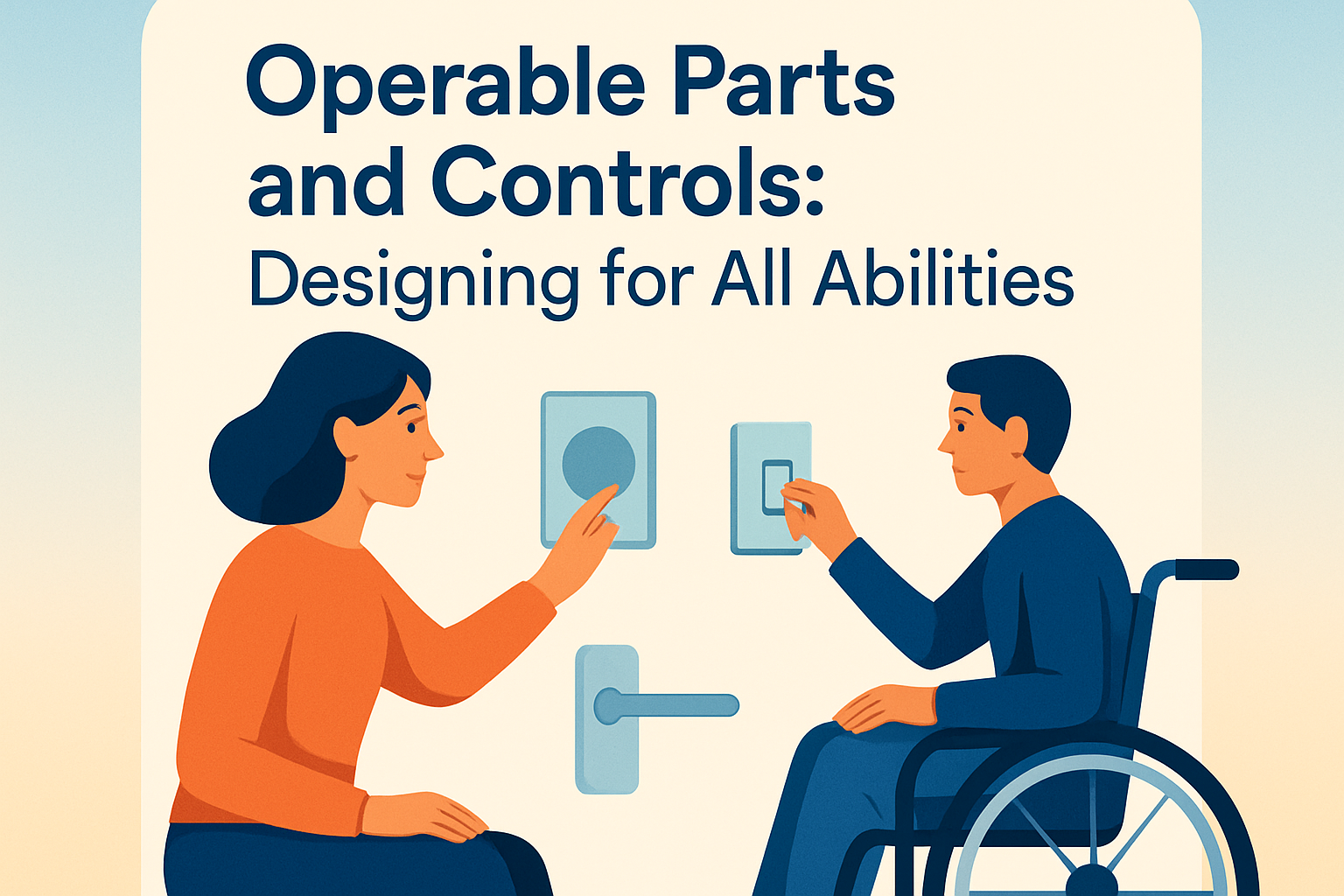
Operable parts and controls include mechanisms that require user interaction, such as light switches, door handles, and elevator buttons. Designing these elements with accessibility in mind ensures that they can be used by individuals with a wide range of abilities. For instance, a lever-style door handle is easier for someone with limited dexterity than a traditional round knob. The choice of design can be the difference between independence and impracticality for individuals with disabilities.
Consider the example of an office building where a company installed automatic doors with sensors. This choice allows everyone, including those using wheelchairs or carrying large items, to access the building with ease. In this case, the operable parts—door sensors—facilitate universal access because they require minimal physical effort to operate. A well-designed sensor door caters to a broad audience, exemplifying how an inclusive approach to operable parts fosters accessibility for all.
Real-World Implementations of Accessible Controls
The importance of accessible controls is increasingly recognized in various sectors, from public transportation to residential housing. For instance, tactile and auditory features on ATMs cater to users with visual impairments, allowing them to perform financial transactions independently. Integrating raised tactile keys and voice guidance systems is a practical example of adapting controls to be more inclusive.
- Public transportation systems often incorporate visual and auditory signals to announce stops, ensuring that individuals with hearing or vision challenges receive the necessary information.
- In residential spaces, smart home technology provides voice-controlled lighting systems that are invaluable for individuals with mobility impairments, eliminating the need for physical interaction.
These adaptations highlight how effective implementation can enhance usability for people living with disabilities, proving that inclusive design encourages equality and autonomy.
Design Principles for Accessible Operable Parts
Effective design prioritizes user comfort, ease of use, and aesthetic appeal, all while adhering to accessibility standards. Key principles include ensuring that operable parts are placed within reach ranges that accommodate wheelchair users and other individuals with mobility constraints. Positioning light switches at lower heights or employing large, easy-to-operate buttons for electronic devices are simple yet effective strategies for promoting inclusion.
Additionally, tactile, visual, and auditory feedback is integral to accessible design. Considering varying sensory needs, operable parts should communicate effectively with users. For example, a touch-operated elevator panel that provides auditory confirmation ensures users with visual impairments receive necessary feedback, contextualizing user interaction with the device. Ensuring controls are intuitive, functional, and adaptable to a wide range of needs is key.
Challenges in Implementing Universal Design
Despite the clear benefits of inclusive design, challenges remain. Misconceptions about the cost of implementing accessible features often deter organizations, despite evidence suggesting that inclusive design can lead to increased user satisfaction and expanded market reach. Addressing these challenges requires a shift in mindset where inclusive design is seen as an upfront investment with long-term benefits.
There is also the challenge of meeting diverse needs without compromising on aesthetics or existing design considerations. However, recent innovations in technology offer numerous solutions to bridge this gap. Incorporating smart technology and flexible systems reduces reliance on traditional models and encourages a more holistic approach to accessibility.
| Design Element | Accessibility Feature | Benefit |
|---|---|---|
| Automatic doors | Sensors | Enable hands-free entry for wheelchair users and people carrying items |
| Elevator buttons | Auditory feedback | Assists visually impaired users in determining their selection |
| Light switches | Low placement and large buttons | Facilitates use by individuals with mobility impairments |
Future Directions in Inclusive Design
The future of inclusive design lies in technology and innovation. As smart homes and workplaces become more common, the role of smart technology in creating accessible environments continues to grow. Voice-activated systems, gesture-based controls, and adaptive interfaces are shaping the vision for a fully inclusive world. These innovations hold promise for further reducing barriers, making seamless, inclusive experiences a reality for all.
Collaborations between technology developers, architects, designers, and the disability community are essential to drive these innovations forward. By involving people who have firsthand experience with disability in the design process, solutions are not only practical but grounded in real-world applicability. This collaborative approach ensures that developments in technology are relevant and effective in addressing the needs of those they aim to serve.
The Role of Policy and Legislation
Regulatory frameworks play a crucial role in driving inclusive design practices worldwide. Legislation such as the ADA in the United States and the Equality Act in the United Kingdom sets standards that safeguard accessibility rights. These policies compel organizations to integrate accessibility into their operations, from workplace environments to public services and products. However, policy alone is insufficient without implementation and awareness. Strategic advocacy and education are critical to ensuring compliance and fostering a culture of inclusion.
Effective policy must also evolve to address emerging challenges and technologies. A proactive legislative approach that anticipates future needs and technological advancements is essential to sustaining momentum in universal design efforts. Policymakers must also consider the diverse realities faced by people with disabilities, ensuring regulations are flexible and progressive.
The Business Case for Universal Design
Embracing inclusive design is not only a legal and social imperative but also a smart business strategy. Designing for all abilities opens up new markets, enhances brand loyalty, and promotes innovation. Companies that prioritize accessibility often see increased customer satisfaction and engagement, as they address the needs of a broader audience.
For example, businesses that ensure their websites are accessible benefit from increased reach and customer base, as more users can access content. Additionally, inclusive workplaces attract diverse talent, enabling organizations to leverage varied perspectives and driving creativity and growth. By considering accessibility a core business value, organizations align their operations with the principles of equity and opportunity.
Conclusion
Operable parts and controls play a pivotal role in shaping spaces and products that are inclusive and accessible to everyone. Incorporating universal design principles into engineering, architecture, and technology ensures that individuals, regardless of ability, can enjoy autonomy and participate fully in society. The integration of accessible design solutions delivers profound benefits, from enhancing quality of life for those with disabilities to boosting organizational values through diversity and inclusion.
Understanding and implementing accessible operable parts is a shared responsibility. By prioritizing inclusivity in design, we create environments where all individuals can thrive. Organizations and policymakers must collaborate actively, while designers and architects champion innovations that dismantle barriers. The call to action is clear: embrace the principles of universal design, harness the power of technology, and commit to a vision of a world accessible to all.
Frequently Asked Questions
1. What are operable parts and controls in the context of design for all abilities?
Operable parts and controls are any components that allow an individual to operate, adjust, or control devices, equipment, and systems in their environment. In the realm of designing for all abilities, this means these components are designed to be accessible and usable by everyone, irrespective of their physical or cognitive abilities. This includes a range of elements like light switches, door handles, elevator buttons, or any interface with which a person must physically interact. Designing these parts to be inclusive often involves considering various disabilities, such as mobility impairments, sensory limitations, and cognitive challenges.
The goal is to eliminate or minimize barriers that prevent people from using these controls efficiently and independently. This can involve ensuring that controls are within reach, easy to grasp, require minimal force, and provide tactile, auditory, or visual feedback. The overarching objective is to make every part of the environment user-friendly to the broadest range of people. By doing so, designers can create spaces that not only enhance accessibility and usability but also improve the quality of life, comfort, and overall experiences of all users.
2. Why is it important to incorporate operable parts and controls in inclusive design?
Incorporating operable parts and controls in an inclusive design paradigm is essential because it ensures that everyone, regardless of their abilities, can engage with and benefit from their environment. When these elements are inclusively designed, they offer equal access opportunities, promote independence, and protect the dignity of every user. For individuals with disabilities, accessible operable parts can be crucial to their autonomy and participation in everyday activities, whether it’s accessing public spaces, using household appliances, or benefiting from workplace technology.
Moreover, inclusive design addresses and anticipates the needs of a demographic that is aging. As the global population ages, more individuals face mobility challenges, implying an increasing demand for facilities that are easy and comfortable for older adults to use. By prioritizing inclusive design today, we cater to the existing need and prepare for future requirements. Furthermore, inclusively designed environments can decrease accidents, enhance productivity by simplifying user interfaces, and foster a welcoming atmosphere that is beneficial socially and economically. The ripple effect of inclusive design thus extends beyond individual benefits, impacting communities and society positively.
3. How can designers ensure that operable parts and controls are accessible to everyone?
Designers can ensure the accessibility of operable parts and controls through several strategic approaches. Firstly, it is essential to adhere to established accessibility standards and guidelines, such as those outlined by the Americans with Disabilities Act (ADA) or similar frameworks applicable in different regions. These guidelines provide specific criteria and dimensions that help in creating user-friendly designs.
Innovative design thinking is also a crucial component. Encouraging feedback from people with disabilities and involving them throughout the design process can lead to better outcomes, as their insights are invaluable in identifying practical challenges and solutions. Additionally, employing universal design principles, which advocate for environments that are inherently accessible to the widest possible audience, ensures that operable controls are functional for all. This might include placing controls at heights easily reached from a wheelchair, using large buttons or touchscreens for easy operation, and integrating motion sensors to automate frequently used functions when manual operation may be challenging.
Technological advances present another opportunity. For example, incorporating smart technology can allow for voice controls and adjustable settings, accommodating various needs and preferences. The aim is a seamless integration where users can interact naturally and comfortably with their surroundings.
4. What are some examples of operable parts and controls that have been successfully designed for all abilities?
There are many successful examples of operable parts that have been inclusively designed to accommodate all abilities. Consider automatic doors in public buildings, which require no manual operation and thus provide easy access to everyone, including wheelchair users and people pushing strollers or carrying heavy items. Similar functionality is evident in motion-sensor faucets in restrooms, where hands-free operation significantly benefits individuals with limited hand dexterity or strength.
In homes and workplaces, you’ll often find lever-style door handles, which are easier to operate than traditional round knobs—particularly beneficial for those with arthritis or limited grip strength. The gradual adoption of smart-home technologies has also enhanced accessibility, with voice-controlled systems allowing users to adjust lighting, temperature, or home appliances without needing to touch any control.
Furthermore, public spaces and transportation systems have implemented braille and raised lettering on controls to assist visually impaired users. Tactile paving has become common to signal changes in environment, such as street crossings, which helps visually impaired or blind individuals navigate safely. These examples underline the importance and effectiveness of thoughtful, inclusive design in creating environments attuned to the needs of all users.
5. How does designing for all abilities enhance the sense of belonging in the community?
Designing for all abilities enhances the sense of belonging by creating spaces and environments where everyone feels welcomed, valued, and able to participate fully without barriers. When individuals can independently and comfortably engage with their surroundings, it promotes a sense of empowerment and respect, enhancing their dignity and self-worth. People with disabilities often face exclusion or marginalization due to environments that aren’t accommodating, which can erode their confidence and willingness to engage in community life.
Conversely, when a community prioritizes inclusivity in its design, it sends a powerful message that diversity is embraced and appreciated. This fosters a stronger community fabric, where interactions and collaborations are enriched by the contributions of all members, including those with disabilities. An inclusive community supports social integration, safety, and cohesion by removing the limitations that lack of accessibility imposes.
In addition, inclusively designed environments can foster empathy and learning among community members, as they become more aware of different needs and perspectives. This instigates a culture of inclusivity beyond physical spaces, promoting policies and attitudes that further support diversity and holistic participation. Ultimately, designing for all abilities cultivates a community ethos where everyone, regardless of their physical or cognitive abilities, feels they have a rightful place and can contribute to the common good.