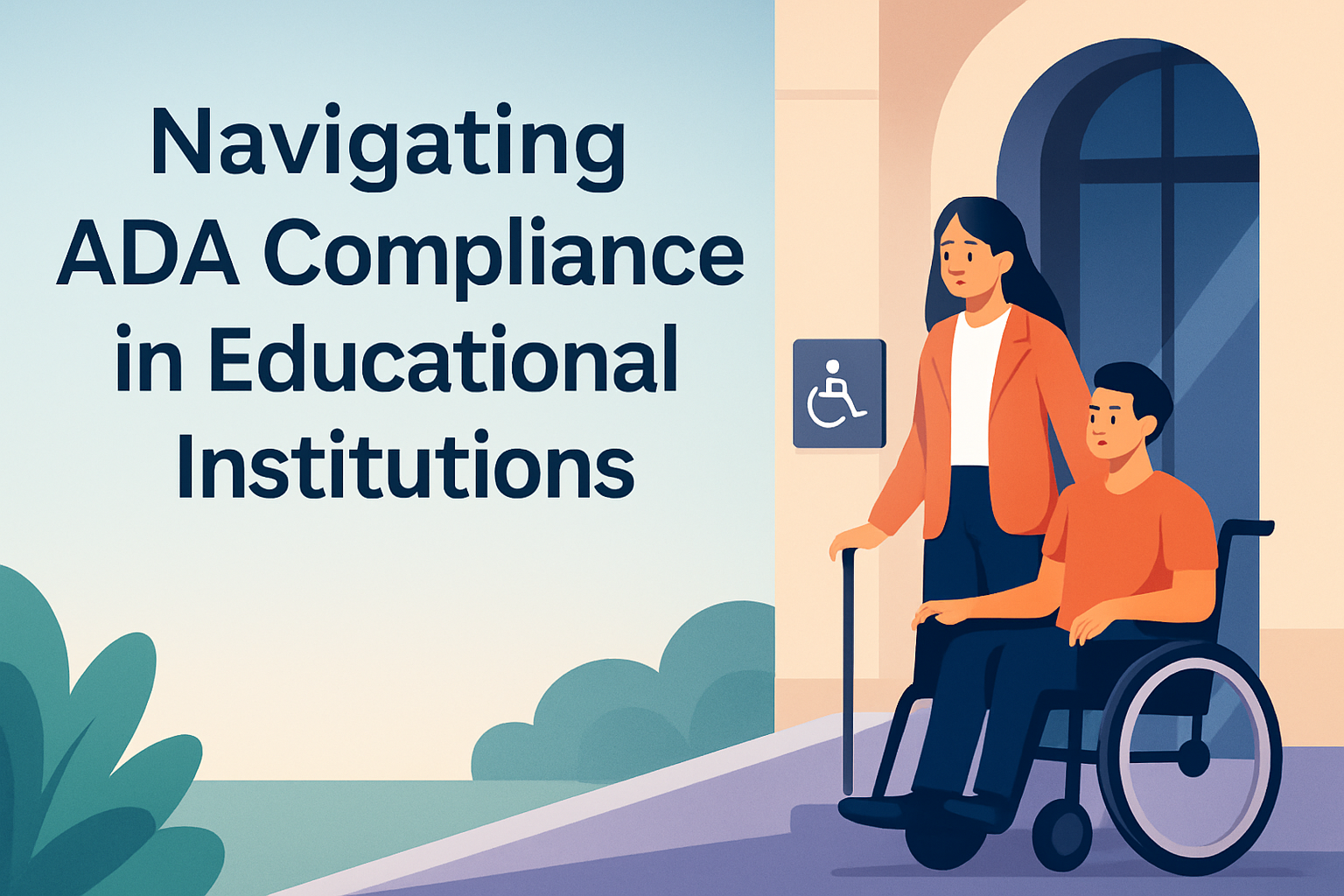
ADA compliance in educational institutions is the practical work of ensuring that students, employees, parents, and visitors with disabilities can access programs, services, technology, and facilities on an equal basis. In my experience advising schools and reviewing campus accessibility plans, the biggest misunderstanding is thinking compliance begins and ends with wheelchair ramps. It does not. The Americans with Disabilities Act, along with Section 504 of the Rehabilitation Act and, in many K-12 settings, the Individuals with Disabilities Education Act, creates overlapping duties that affect admissions, classroom instruction, digital content, housing, athletics, transportation, emergency planning, and grievance handling.
At its core, ADA compliance means eliminating discrimination and providing reasonable modifications, effective communication, and accessible environments unless doing so would fundamentally alter a program or impose an undue burden. Title II applies to public schools, colleges, and universities run by state or local governments. Title III applies to private educational institutions that qualify as places of public accommodation, with some religious exemptions. Section 504 often reaches even farther because any institution receiving federal financial assistance must not exclude qualified individuals with disabilities. The legal framework matters because schools are complex ecosystems: one inaccessible registration form, one captionless lecture video, or one poorly handled accommodation request can block participation as effectively as a locked door.
This issue matters for three reasons. First, the disability population is substantial. The National Center for Education Statistics has repeatedly reported that students with disabilities make up a meaningful share of enrollment in both K-12 and postsecondary settings. Second, enforcement is active. The U.S. Department of Education Office for Civil Rights and the U.S. Department of Justice investigate complaints involving inaccessible websites, discriminatory policies, and failures to provide auxiliary aids. Third, accessibility improves operations for everyone. Clear signage helps visitors, captions support multilingual learners, accessible PDFs work better on mobile devices, and consistent accommodation workflows reduce administrative confusion. Institutions that treat ADA compliance as an ongoing governance function, not a reactive legal task, are the ones that reduce complaints and build trust.
To navigate this area well, leaders need to understand both the legal standards and the day-to-day decisions where risk appears. Accessibility is not a single department’s job. Facilities teams manage physical access. IT controls digital platforms. Faculty shape instructional materials. Human resources handles employee accommodations. Student affairs oversees housing and activities. Procurement signs contracts that can lock in inaccessible software for years. The most effective institutions align these functions under a clear policy framework, designate responsible officials, train staff, document decisions, and review barriers before someone is harmed by them.
Understanding the legal framework schools actually operate under
The most common question I hear is simple: which law applies to my institution? The answer is often more than one. Public universities and public school districts are primarily governed by ADA Title II, which requires equal access to services, programs, and activities. Private colleges, private schools, tutoring centers, and testing entities are typically covered by ADA Title III, though the details vary by organization type. Section 504 applies whenever federal funding is involved, which includes most colleges and many K-12 institutions. IDEA adds another layer for eligible K-12 students needing special education, but ADA and Section 504 still matter because they cover broader nondiscrimination and access obligations.
These laws overlap, yet they are not identical. IDEA focuses on specially designed instruction and related services through an individualized education program. Section 504 addresses discrimination and often results in accommodation plans. ADA addresses equal access broadly, including communication, policy modification, and barrier removal. In practice, schools make mistakes when they silo these requirements. For example, a university may appropriately grant note-taking software through disability services but fail to ensure the learning management system works with screen readers. A district may have strong IEP processes yet neglect accessible public-facing web content for parents with visual impairments. Compliance requires a systems view.
Standards also matter. For buildings, institutions often look to the 2010 ADA Standards for Accessible Design. For digital accessibility, schools increasingly map their work to the Web Content Accessibility Guidelines, typically WCAG 2.1 Level AA, because that is the recognized benchmark in settlements, procurement reviews, and remediation projects. Effective communication duties may require qualified interpreters, CART captioning, Braille, large print, accessible electronic documents, or plain-language alternatives depending on the context. The operative legal principle is not offering the cheapest aid by default; it is providing communication that is as effective as communication with others.
Physical accessibility is broader than entrances and elevators
When institutions assess physical ADA compliance, they should evaluate the full student and visitor journey, not isolated architectural features. Parking, curb cuts, path of travel, door hardware, reception counters, classroom seating locations, lab benches, restrooms, dorm rooms, dining halls, theaters, athletic facilities, libraries, and emergency exits all affect real access. I have seen campuses install a compliant ramp to a main building while leaving the advising office inside reachable only through heavy manual doors and a narrow service corridor. Technically improved, functionally inaccessible.
Older campuses face particular challenges because many buildings predate modern standards. That does not automatically excuse barriers. Under Title II, public entities must operate programs so that, when viewed in their entirety, they are accessible. Under Title III, private institutions have duties around barrier removal where readily achievable and must apply accessibility standards in new construction and alterations. The practical lesson is that schools need transition plans, capital budgeting, and interim measures. If a historic lecture hall cannot be quickly renovated, the institution may need to relocate classes, provide accessible seating and routes, and ensure companion spaces, restrooms, and emergency procedures are equally usable.
Physical access also includes sensory and cognitive considerations. Good wayfinding, high-contrast signage, hearing loops in auditoriums, reduced-glare lighting in some environments, and predictable layouts help many users. Residence life is another frequent gap. Accessible rooms must be truly integrated into housing options, not treated as undesirable overflow spaces far from dining or social areas. Athletic and extracurricular programs matter too. The ADA does not permit schools to advertise inclusion while designing programs that students with disabilities cannot realistically join.
Digital accessibility is now a frontline compliance issue
If there is one area where educational institutions underestimate risk, it is digital accessibility. Admissions portals, course registration tools, student account systems, library databases, classroom videos, scanned PDFs, mobile apps, and virtual event platforms all fall within the access obligation. An inaccessible website can block a student before enrollment even begins. In OCR resolutions and Department of Justice settlements, recurring failures include missing alternative text, poor heading structure, low color contrast, keyboard traps, uncaptioned media, inaccessible forms, and PDFs that are images rather than readable text.
Schools should build digital accessibility into governance, not just remediation. That means adopting a standard such as WCAG 2.1 AA, designating owners for web content, requiring accessibility checks before publication, training faculty on document creation, and testing key workflows with assistive technology. Common tools include WAVE, axe DevTools, Siteimprove, Adobe Acrobat accessibility checker, and screen readers such as NVDA, JAWS, and VoiceOver. Automated scans help identify code-level issues, but they do not replace manual testing. I have watched a portal pass an automated score while remaining unusable by keyboard because the focus order was illogical during payment and registration.
Procurement is where many institutions either prevent or create long-term problems. Before purchasing edtech, schools should require a current VPAT based on the Accessibility Conformance Report format, review it critically, and include contractual accessibility language with remediation timelines. A VPAT is not proof of accessibility; it is a vendor self-disclosure document. Strong contracts require testing, cooperation, and consequences if promised accessibility fails. This is especially important for learning management systems, remote proctoring tools, science simulations, and campus safety apps, where inaccessibility can affect core academic participation.
Accommodation processes succeed when they are prompt, interactive, and documented
Most ADA complaints are not caused by bad intentions; they stem from slow, inconsistent, or poorly documented accommodation processes. A legally sound process starts with a clear request path, an interactive discussion, individualized assessment, timely implementation, and written confirmation. Institutions should avoid rigid rules that ignore context, such as requiring unnecessary medical documentation for obvious disabilities or refusing to consider temporary impairments where the law may still apply. The goal is to determine what access barrier exists and what reasonable adjustment will remove it.
In educational settings, accommodations can include testing adjustments, accessible housing, interpreters, captioning, attendance flexibility, assistive technology, ergonomic furniture, modified meal plan access, and permission for service animals where required by law. For employees, accommodations may involve modified schedules, remote work in appropriate cases, reassignment of marginal tasks, or accessible software. The nuance is important: schools do not have to approve every requested measure exactly as proposed, but they do need to provide an effective alternative if one exists. Blanket denials are where institutions get into trouble.
| Area | Common request | Strong compliance practice | Frequent mistake |
|---|---|---|---|
| Academics | Extended exam time | Coordinate with faculty and testing center early | Approving late and disrupting exam schedules |
| Digital access | Captioned lectures | Caption by default for recorded core content | Waiting for a complaint before acting |
| Housing | Accessible room or ESA review | Use prompt individualized assessment | Applying inflexible deadlines without exceptions |
| Employment | Adaptive software | Test compatibility with existing systems | Buying tools without IT validation |
Documentation should show the institution considered the request in good faith, consulted relevant stakeholders, and weighed essential requirements carefully. Faculty should understand the difference between maintaining academic standards and imposing inaccessible methods. For example, a nursing program can preserve essential clinical competencies while still providing accessible instructional materials, scheduling adjustments, or auxiliary aids. What schools must not do is invoke “essential” as a vague defense without analysis. Consistency, speed, and evidence-based reasoning are what protect both access and academic integrity.
Training, grievance procedures, and culture determine whether policies work
Even well-written policies fail if frontline staff do not know how to apply them. Effective ADA compliance depends on recurring training for faculty, administrators, student-facing staff, campus police, event planners, and IT teams. Faculty need practical guidance on accessible slides, captioning, classroom microphones, and handling accommodation letters. Admissions staff need scripts for disability-related inquiries that avoid screening out applicants. Facilities teams need standards for temporary disruptions and alternative routes. Procurement officers need accessibility checkpoints before contracts are signed. One annual memo is not enough.
Institutions also need a reliable grievance process. Public entities with fifty or more employees must designate an ADA coordinator and adopt grievance procedures under Title II. In practice, every institution benefits from a visible contact point, clear timelines, and anti-retaliation protections. Complaints should trigger root-cause analysis, not just one-off fixes. If one student reports inaccessible PDFs in a biology course, the right response is to review the department’s content creation practices, not merely remediate a single document and close the ticket.
Culture matters because accessibility decisions happen under pressure. A registrar deciding classroom assignments, a professor posting last-minute readings, or an event team choosing a livestream platform can either prevent barriers or create them. Institutions with strong cultures make accessibility part of normal quality control. They include it in project charters, event checklists, syllabus templates, and vendor onboarding. They budget for interpreters and captioning instead of treating them as surprises. They audit high-impact services regularly. Most importantly, they listen to disabled students and employees, who usually identify practical barriers long before legal counsel ever sees a complaint.
How schools can build a sustainable ADA compliance program
The institutions that perform best treat ADA compliance as enterprise risk management tied to student success. Start with a baseline assessment covering facilities, websites, documents, procurement, policies, emergency plans, housing, transportation, and public events. Rank findings by severity, user impact, and legal exposure. Then assign ownership. Accessibility without accountable owners becomes everyone’s aspiration and no one’s deliverable. I recommend a cross-functional committee led by an ADA or accessibility officer, with representatives from disability services, IT, facilities, HR, academics, procurement, communications, and student affairs.
Next, set standards and workflows. Publish a digital accessibility policy, adopt design and document templates, require captioning and accessible procurement reviews, and integrate accessibility into renovation planning. Track requests and remediation in a case management or ticketing system so patterns become visible. Metrics should include response times, number of captioned videos, percentage of audited pages passing manual review, remediation time for critical issues, and completion of staff training. These are operational indicators, not vanity metrics.
Finally, review continuously. Laws evolve, technology changes, and campus populations shift. Periodic audits, user testing with people who use assistive technology, tabletop exercises for emergency access, and contract reviews for legacy vendors keep institutions from drifting into noncompliance. The payoff is not merely avoiding investigations. It is creating an educational environment where access is predictable, dignity is preserved, and participation does not depend on a person’s ability to navigate unnecessary barriers.
Navigating ADA compliance in educational institutions requires more than checking legal boxes. Schools must understand the interplay of ADA titles, Section 504, and other education laws; address physical and digital barriers together; run prompt, individualized accommodation processes; and support all of it with training, grievance channels, procurement controls, and ongoing review. The central benefit is straightforward: equal access to learning, employment, and campus life for people with disabilities.
The strongest institutions do not wait for complaints to reveal weaknesses. They assess systems, document decisions, adopt recognized standards such as the 2010 ADA Standards and WCAG 2.1 AA, and build accessibility into daily operations. That approach reduces legal risk, improves user experience, and strengthens trust across the campus community. If your institution has not completed a recent accessibility audit, start there, assign accountable owners, and turn compliance into a measurable action plan.
Frequently Asked Questions
What does ADA compliance actually mean for educational institutions?
ADA compliance in educational institutions means far more than installing ramps or adding a few accessible parking spaces. In practice, it requires schools, colleges, and universities to ensure that students, employees, parents, and visitors with disabilities have equal access to programs, services, activities, technology, communication, and physical spaces. That includes classrooms, residence halls, athletic facilities, websites, learning management systems, digital documents, transportation, admissions processes, and extracurricular programs. It also applies to how institutions communicate, respond to accommodation requests, and remove unnecessary barriers that prevent full participation.
Educational institutions also need to understand that ADA compliance does not operate in isolation. Depending on the setting, responsibilities may also arise under Section 504 of the Rehabilitation Act and, in many K-12 contexts, the Individuals with Disabilities Education Act. Together, these laws shape how schools provide access, avoid discrimination, and make reasonable modifications. A compliant institution is not simply reacting to complaints; it is building accessibility into daily operations, policies, procurement decisions, and long-term planning. The most effective schools treat accessibility as a core part of institutional quality, risk management, and student success rather than a narrow facilities issue.
Is ADA compliance only about building accessibility and wheelchair access?
No, and this is one of the most common misconceptions schools have. Physical access is important, but ADA compliance extends well beyond the built environment. An educational institution may have compliant ramps, elevators, and restrooms, yet still create barriers through inaccessible websites, videos without captions, PDFs that screen readers cannot interpret, classroom policies that fail to allow reasonable modifications, or events that do not provide auxiliary aids and services when needed. Equal access includes communication access, technology access, program access, and policy access.
For example, a student with a visual impairment may encounter barriers if course materials are not compatible with assistive technology. A deaf parent may be excluded from a school meeting if no qualified interpreter is provided when required. An employee with a disability may face unlawful obstacles if the school lacks a clear interactive process for workplace accommodations. Even emergency procedures can raise compliance concerns if they do not account for individuals with mobility, sensory, or cognitive disabilities. In short, institutions should think broadly about how people experience the campus and its services from start to finish. ADA compliance is about removing barriers wherever they exist, not just at the front entrance.
How do the ADA, Section 504, and other disability laws work together in schools?
The ADA and Section 504 often overlap, and both are highly relevant in educational settings. Section 504 applies to institutions that receive federal financial assistance, which includes most public schools, colleges, and many private institutions. It prohibits disability-based discrimination and requires qualified individuals to have equal access to educational opportunities and benefits. The ADA, particularly Title II for public entities and Title III for certain private institutions, also prohibits discrimination and requires accessibility in programs, services, and facilities. In many situations, a school’s obligations under these laws will be similar, and institutions should plan for compliance in a coordinated way rather than treating each law as a separate silo.
In K-12 settings, the Individuals with Disabilities Education Act may also come into play for students who qualify for special education and related services. However, ADA and Section 504 obligations still matter, even when IDEA applies. These frameworks serve different purposes and can impose different requirements regarding access, accommodations, and educational services. For school leaders, the practical takeaway is simple: legal compliance requires a comprehensive understanding of how these rules interact in admissions, instruction, discipline, transportation, communications, athletics, employment, and campus life. Institutions that rely on a single checklist or assume one plan covers every legal obligation often miss important gaps.
What are the most important steps a school should take to improve ADA compliance?
The best starting point is a thorough accessibility assessment that looks at the institution as a whole. That means reviewing physical facilities, digital platforms, policies, procedures, communications, procurement standards, and accommodation workflows. Schools should evaluate whether classrooms, housing, restrooms, parking, pathways, and event spaces are accessible, but they should also examine website usability, captioning practices, document accessibility, software procurement, and how requests for accommodations are handled. A meaningful review identifies not only obvious barriers but also the systemic issues that cause recurring accessibility problems.
After assessment, institutions should create a prioritized remediation plan with clear deadlines, budget considerations, and assigned responsibility. Training is also essential. Faculty, administrators, IT teams, facilities staff, human resources personnel, and front-line employees all play a role in accessibility, and each group needs practical guidance tailored to its responsibilities. Schools should also establish clear grievance procedures, designate responsible personnel where required, maintain documentation, and build accessibility into future decisions rather than treating it as a retrofit. For example, purchasing inaccessible software and trying to patch it later is often more expensive and legally risky than requiring accessibility upfront. The strongest compliance programs combine leadership commitment, consistent processes, regular auditing, and a willingness to respond quickly when barriers are identified.
What risks do educational institutions face if they ignore ADA compliance?
The risks are both legal and operational. Institutions that fail to meet ADA and related disability law obligations may face complaints, investigations, lawsuits, settlement agreements, monetary costs, and reputational harm. Enforcement actions can come from students, employees, parents, advocacy groups, or government agencies, and even a single unresolved barrier can escalate into a broader review of institutional practices. Beyond direct legal exposure, noncompliance can disrupt enrollment, retention, employee performance, community trust, and campus morale. Accessibility failures often become highly visible because they affect basic participation in education and campus life.
There is also a deeper institutional cost that is easy to overlook. When students or employees repeatedly encounter inaccessible systems, they lose time, confidence, and opportunities. Parents and visitors may conclude that the institution is not prepared to serve the full community equitably. Accessibility barriers can interfere with academic success, participation in extracurricular activities, recruitment, and public engagement. By contrast, schools that take compliance seriously tend to operate more effectively because they create clearer systems, better communication, and more inclusive environments for everyone. In that sense, ADA compliance is not just about avoiding penalties; it is about building an institution that is legally sound, educationally effective, and genuinely accessible in everyday practice.