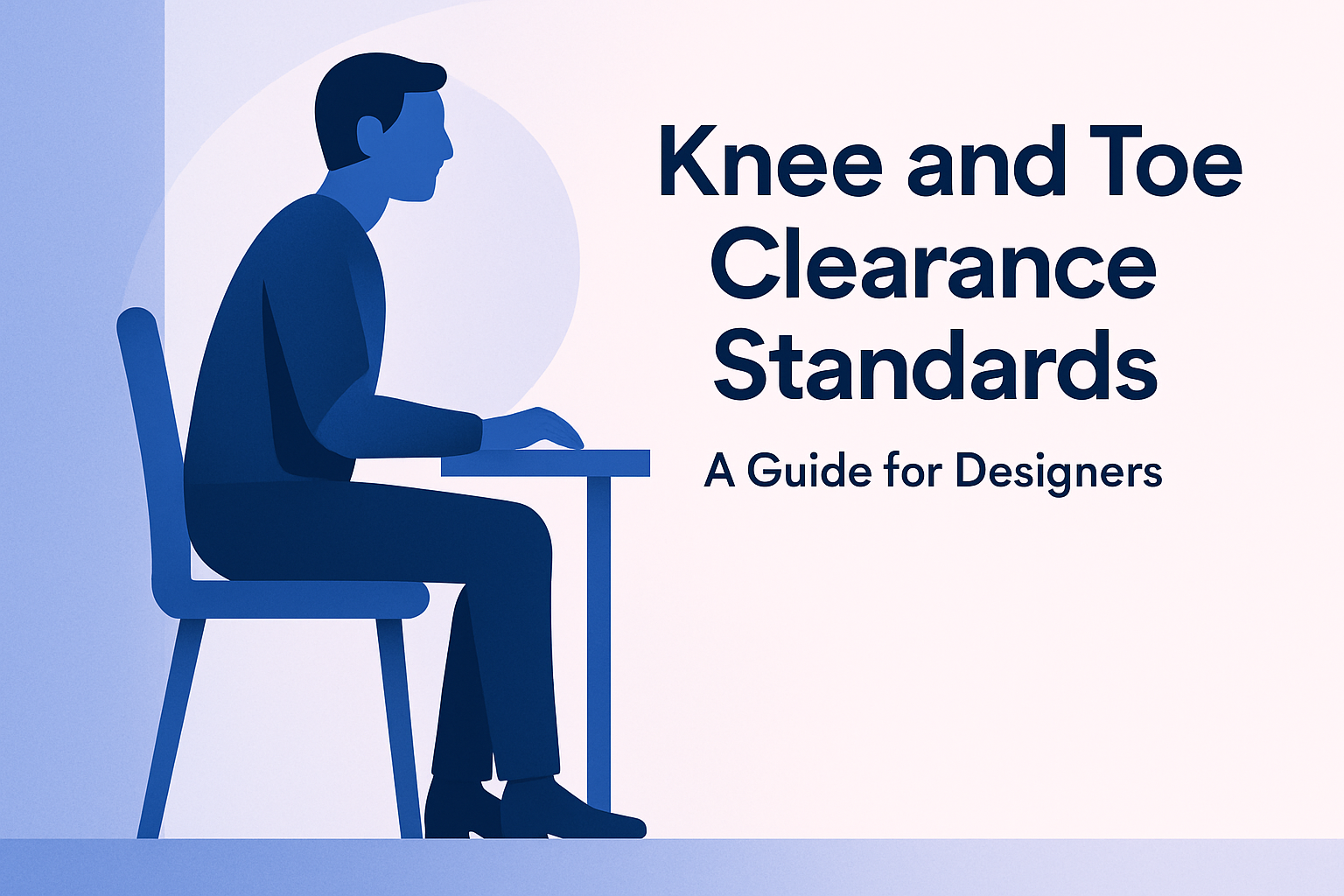
Knee and toe clearance are critical components of ergonomic design that significantly impact how people interact with their environments, particularly in workspaces and public facilities. Understanding these standards is essential for creating spaces that are not only functional but also comfortable and accessible to everyone. In this article, we will explore the basics of knee and toe clearance standards, discuss why these standards matter, and delve into practical applications for designers. Whether you’re a seasoned architect, interior designer, or a novice in the field, this guide is meant to simplify the complexities surrounding clearance standards and help you implement them effectively in your projects.
These standards revolve around the minimum space required beneath furniture or fixtures, ensuring users can comfortably navigate and use the space effectively. “Knee clearance” refers to the space needed at the knee level when sitting or standing, allowing for freedom of movement without obstruction. On the other hand, “toe clearance” refers to the space required at the floor level, ensuring feet can fit underneath a structure without difficulty. These measurements are not only important for comfort but also crucial for accessibility, particularly for individuals with disabilities who rely on these standards for safe and efficient use of environments.
Compliance with knee and toe clearance standards ensures that designs cater to the broadest possible range of users. From fostering inclusivity to enhancing user comfort and safety, these standards hold substantial significance. As we progress through the article, we will delve deeper into each aspect of these standards, providing real-world examples and practical insights. The knowledge imparted here aims to inform your design decisions, guaranteeing spaces that are as welcoming as they are functional. With that foundation laid, let’s delve into the details of knee and toe clearance standards and see how they can be seamlessly integrated into your designs.
The Importance of Knee and Toe Clearance
Understanding the specifics of knee and toe clearance helps in designing spaces that are accessible and comfortable for users. Imagine a scenario where an individual in a wheelchair tries to access a desk with insufficient knee clearance. The odds are they’ll have trouble getting close enough to use it effectively, underscoring the importance of adhering to clearance standards. In this section, we’ll explore why these standards matter in multiple contexts, from offices to public facilities, offering insights into their pivotal role in functional and inclusive design.
Take the example of a busy office workspace. Office desks and workstations need adequate knee and toe clearance to allow employees of varying sizes access to work comfortably. Insufficient knee clearance can lead to restricted leg movement, poor posture, and eventual discomfort throughout the day. By adhering to standards, designers contribute to improved ergonomics and employee satisfaction.
Public facilities offer another vital example. Consider public restrooms: ADA (Americans with Disabilities Act) regulations mandate specific knee and toe clearance measurements ensuring facilities are accessible to people with disabilities. When properly implemented, these standards enable smooth operation of individuals’ wheelchairs, allowing easy maneuverability within stalls. Ignoring these standards can mean non-compliance with regulations and potential difficulty for a significant segment of the population.
Standards and Measurements: An Overview
Knee and toe clearance standards differ depending on the application, but they generally follow guidelines laid out by bodies like the ADA and ISO (International Organization for Standardization). Let’s look at essential measurements and regulations impacting designs.
The ADA states that for wheelchair accessibility, the minimum knee clearance should be 27 inches high, 30 inches wide, and 11-25 inches deep under desks or tables. The toe clearance, on the other hand, requires a minimum of 9 inches in height above the floor and 6 inches in depth. These measurements ensure that a person in a wheelchair can comfortably position themselves close to the workstation without obstruction.
| Application | Knee Clearance (Height x Depth) | Toe Clearance (Height x Depth) |
|---|---|---|
| Office Desk | 27″ x 19″ | 9″ x 6″ |
| Restroom Sink | 29″ x 8″ | 9″ x 8″ |
| Cafeteria Table | 28″ x 25″ | 10″ x 8″ |
These regulations demonstrate a balance between design aesthetics and functionality, crucial for seamlessly integrating effective solutions. It’s important not just to note these measurements, but also to comprehend the context of their applications to make sound design decisions.
Considerations in Diverse Contexts
When incorporating knee and toe clearance into designs, varying contexts necessitate unique considerations. One size doesn’t fit all, and recognizing the nuances of different spaces is vital to achieving optimal outcomes.
Consider restaurants and cafes. These establishments possess varied clientele, necessitating options for diverse seating arrangements. Elevated bar seating requires higher toe clearance, while standard seating aligns closer with general standards but may necessitate adaptable knee clearance configurations. Creating diverse seating arrangements that accommodate standard and accessible seating ensures a welcoming venue for all patrons.
Educational institutions, another significant area, demand well-thought-out design for lecture halls and classrooms. Tablet arm chairs, desks, and multipurpose rooms must fulfill accessibility requirements while facilitating fluid circulation. When schools offer accessible seating with appropriate clearances, they align themselves with inclusivity objectives and support students, educators, and visitors alike.
Real-World Application Challenges
Designers can encounter challenges when implementing knee and toe clearance standards, particularly when remodeling existing spaces. Renovations may mean compromises between maintaining architectural integrity and adopting updated clearance guidelines. The constraints stem from limitations due to pre-existing installations, requiring creative problem-solving to balance the old and new.
One method employed is adaptive reuse, where designers intelligently retrofit furniture or structures with complementary adaptations. These modifications ensure compliance without overhauling entire setups. For instance, adding adjustable-height desks can accommodate various users without extensive remodeling.
Collaboration with engineers, architects, and accessibility consultants proves invaluable during such projects. These partnerships offer multidisciplinary perspectives, which maintain rigorous attention to detail while innovatively resolving space constraints.
How Designers Can Stay Compliant
The process of staying compliant with knee and toe clearance standards requires continual research and education. Regulatory updates can occur unexpectedly, and maintaining awareness of these changes ensures design relevance and compliance.
Regularly consulting official guidelines provided by reputable sources such as ADA, ISO, and regional building codes prevent non-compliance and foster adherence to best practices. Additionally, participating in accessibility workshops, networking events, and continuous professional development reinforces knowledge advancements and implications for design procedures.
Ultimately, designing around clearance standards mandates a forward-thinking approach. Although adhering to regulations forms a basis, a designer’s objective should be proactively accommodating the future of inclusivity and accessibility. Viewing these standards not as constraints but as avenues to enrich functionality will deliver an elevated user experience, resonating with diverse audiences.
Conclusion
Knee and toe clearance standards serve as foundational pillars in ensuring that environments are accessible, comfortable, and inclusive. By adhering to these guidelines, designers are equipped to create spaces that cater to a wide range of users, enhancing both functionality and comfort. Whether it’s ensuring employees are comfortable in their workspaces, or individuals with disabilities can navigate public facilities with ease, these standards hold tremendous value. As you’ve seen throughout this guide, the application and importance of these standards extend across diverse contexts, presenting both opportunities and challenges for designers.
The key takeaway is that compliance with knee and toe clearance standards is not optional—it’s necessary for ethical, practical, and legal reasons. It’s about designing with empathy and foresight, creating environments that are as inclusive as they are useful. As a designer, your commitment to these standards signifies a dedication to bettering societies by prioritizing human-centric design. Therefore, the challenge moving forward is to integrate these insights into your future projects, ensuring spaces that are accessible, innovative, and accommodating.
As you embark on your next project, consider the impact your design will have on its users. Make the conscious choice to prioritize knee and toe clearance as integral elements of your design process. By doing so, you contribute to a future where all environments are accessible and supportive, setting a standard of excellence and empathy in design. Ready to take the next step? Begin by evaluating your current projects for compliance and see where adjustments can enhance user experience. Your action is a step towards a broader movement for accessible and inclusive spaces.
Frequently Asked Questions
1. What are knee and toe clearance standards, and why are they important for designers?
Knee and toe clearance standards refer to the specific dimensions that allow sufficient space for individuals, particularly those using wheelchairs, to comfortably fit their knees and toes underneath surfaces like tables, desks, countertops, and other furniture. These standards are crucial because they ensure the accessibility and usability of public spaces and workplaces for everyone, including people with disabilities. Designers must consider these clearances to create environments that do not inadvertently exclude or discomfort any user, thus promoting inclusivity and reducing the chance of physical strain or injury. Proper knee and toe clearance also aligns with legal accessibility guidelines, such as the Americans with Disabilities Act (ADA), which specifies minimal dimensions to accommodate people with varying needs.
2. What are the specific measurements required for knee and toe clearance?
The exact measurements for knee and toe clearance can vary depending on the region and governing standards, but generally, you can refer to the ADA guidelines, which are widely recognized. For knee clearance, a common standard is a space that is at least 27 inches high, 30 inches wide, and 19 inches deep to accommodate the lower limbs comfortably. The toe clearance typically requires a depth of at least 6 inches and a height of at least 9 inches above the floor, which extends underneath a surface like a countertop or desk. These measurements ensure that a person seated in a wheelchair can comfortably approach and sit at surfaces without obstruction, enabling them to perform activities with ease. Designers should use these guidelines as a starting point, always considering specific needs for each project.
3. How do knee and toe clearance standards enhance the user experience in commercial spaces?
Incorporating knee and toe clearance standards in commercial spaces significantly enhances the user experience by promoting inclusivity, comfort, and functionality. When these standards are thoughtfully implemented, they allow all customers and employees, including those with limited mobility, to interact with facilities effortlessly and with confidence. For example, in a restaurant setting, tables with proper clearance ensure that patrons using wheelchairs can dine comfortably without being squeezed or restricted. In workplaces, appropriate desk designs allow employees to maintain ergonomic postures while working, reducing strain and increasing productivity. Essentially, adhering to these standards leads to spaces that are inviting and accessible to all, thus broadening the user base and improving public image.
4. How should designers plan for knee and toe clearances in public facilities?
Designers planning for knee and toe clearances in public facilities should start by familiarizing themselves with the relevant accessibility standards and guidelines, such as the ADA. They should conduct a thorough assessment of the intended users and the specific functions of each space, then integrate these considerations into the design process. Collaboration with accessibility experts and stakeholders, such as individuals who have firsthand experience with mobility aids, can provide valuable insights. It’s also important to carry out mock-ups and usability tests with a diverse group of users to ensure designs meet real-world needs. Attention to material selection is vital, as surfaces like countertops should be both durable and supportive yet friendly to user interaction (e.g., no sharp edges). By prioritizing these design elements, public spaces can achieve both form and function in alignment with accessibility goals.
5. Can you provide examples of common mistakes designers make concerning knee and toe clearances, and how to avoid them?
One common mistake is underestimating the required space, leading to insufficient clearance that restricts access for wheelchairs and limits user movement. Designers can avoid this by always cross-checking dimensions against accessibility standards before finalizing designs. Another error is the improper placement of furniture or fixtures that may unintentionally impede required clearances. Strategic planning and layout can mitigate this issue by ensuring ample space around key areas like desks or customer service counters. Additionally, selecting the wrong type of furniture can result in obstructions—choosing adjustable-height desks or movable seating can be an effective solution. Finally, overlooking environmental factors such as floor-level changes or protruding elements that could affect maneuverability is another pitfall; incorporating consistent, level flooring and recessing any obstacles can create a more accessible environment. By addressing these issues, designers can achieve a seamless and inclusive experience for all users.