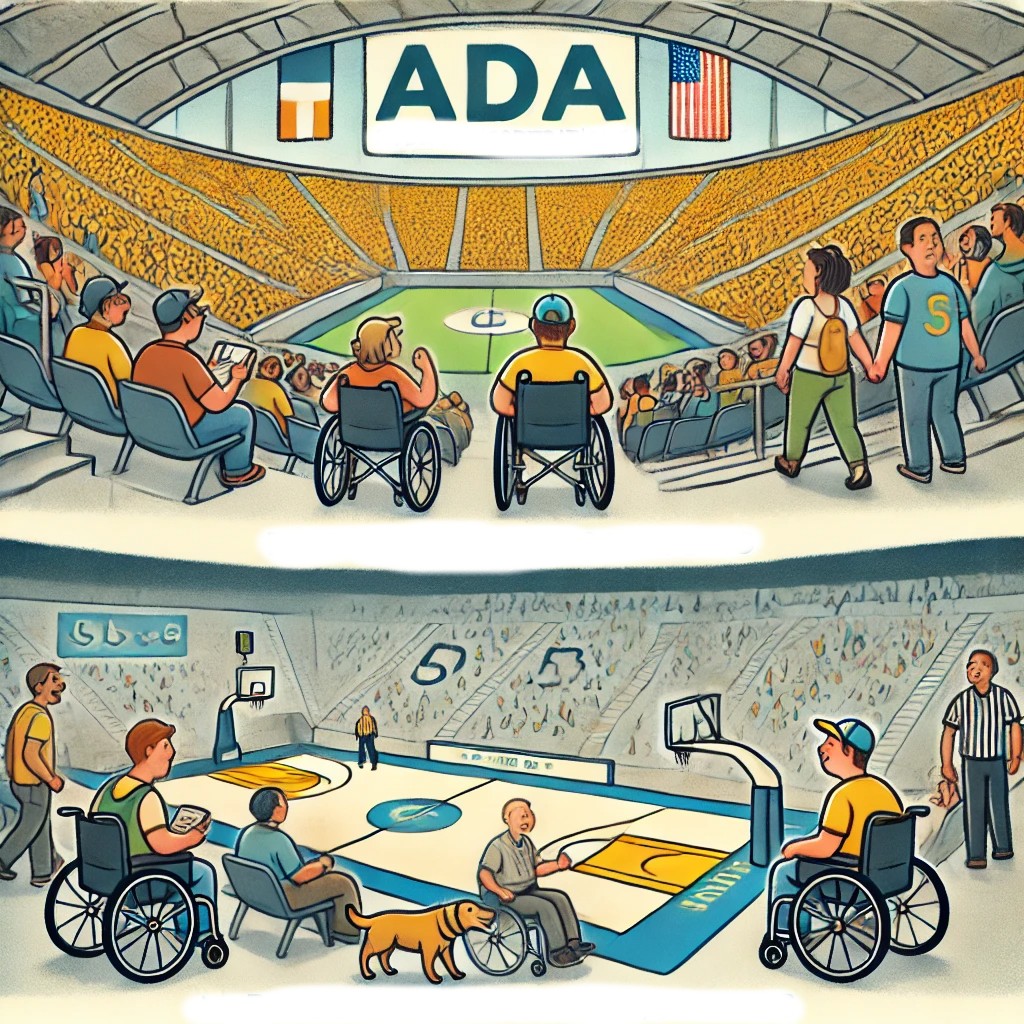
Public parks and recreational areas have long served as vital spaces for communities, offering a tranquil respite from the bustle of everyday life and a platform for various physical activities. However, for individuals with disabilities, accessing these public amenities has historically been a challenge. The fight for equal rights and accessibility in such spaces underscores the broader struggle for inclusivity. Thanks to the Americans with Disabilities Act (ADA), public parks are becoming more accessible and inclusive, ensuring everyone can enjoy their offerings. In this article, we’ll delve into the role the ADA plays in transforming public parks, explore compelling case studies, and examine how these rights translate into real-world applications.
The ADA’s Impact on Public Parks
The Americans with Disabilities Act, enacted in 1990, was a landmark civil rights law that sought to eliminate discrimination against individuals with disabilities in various spheres of public life, including public parks and recreational facilities. The ADA requires public entities to ensure that new construction and alterations in public spaces are accessible. It also mandates the elimination of barriers in pre-existing spaces, provided it is feasible. Importantly, the act covers all varieties of disabilities, from those requiring physical adjustments like wheelchair ramps to sensory considerations, such as signs for visually or hearing-impaired individuals.
One fundamental obligation is that public entities must ensure programs and services provided at these facilities are accessible and inclusive. This comprehensive mandate means that everything from playground equipment to hiking trails and picnic areas should be designed with diverse needs in mind. The overarching goal of the ADA in this context is to foster a sense of belonging and ensure that people with disabilities are not sidelined from communal and recreational experiences.
Accessibility Innovations in Public Parks
Innovation plays a crucial role in making public parks more accessible. For example, many parks have embraced universal design principles, which advocate creating environments usable by all people to the greatest extent possible without the need for adaptation or specialized design. Such innovations include wheelchair-accessible playground equipment, tactile guide paths for individuals with visual impairments, and sign language waysides that allow for more inclusive communication.
A noteworthy example is the implementation of accessible nature trails, where surfaces are stabilized for wheelchair access, information signs are placed at a height suitable for wheelchair users, and audio descriptions are available for individuals with visual impairments. Parks are increasingly installing multi-sensory trails that stimulate senses beyond sight, allowing visitors to engage with their surroundings through touch and sound. These forward-thinking design concepts have not only broadened access for people with disabilities but have also enhanced the overall park experience for all visitors.
Real-World Case Studies in Accessibility
Various cities across the United States have become exemplary models of accessibility in public parks. Consider the city of San Francisco’s Golden Gate Park, which has meticulously integrated ADA standards to offer multiple accessible routes, seating areas, and restrooms. This has allowed individuals with disabilities to explore over a thousand acres of lush green space without hindrance.
Another significant case is the Central Park in New York City, which has implemented numerous accessibility features over the years. Central Park’s “Shakespeare Garden” not only enthralls with its flora but also features braille plaques for individuals with visual impairments, and wheelchair-accessible paths that lead to its Shakespearean-themed exhibits.
In these instances, accessibility is not merely a box-ticking exercise but a committed effort to blend inclusivity into the natural beauty of parks, promoting an environment where everyone can thrive. These real-world applications underscore the ADA’s transformative impact and are indicative of a broader societal shift towards comprehensive accessibility.

Challenges and Areas for Improvement
Despite the progress made, challenges persist that hinder full accessibility in many public parks and recreational areas. A significant challenge is funding – many public facilities lack the necessary resources to make substantial changes or renovations required under ADA guidelines. This often results in a discrepancy where some parks are fully accessible, while others lag, creating disparity in access opportunities.
Furthermore, there is an ongoing need for awareness and training among park staff and management. Ensuring that staff understand ADA requirements and are equipped to meet the needs of individuals with disabilities is crucial for fostering a truly inclusive environment. In some cases, the lack of regular monitoring and maintenance of accessible pathways and facilities can also pose challenges and create additional barriers for park-goers with disabilities.
By addressing these challenges through adequate funding, education, and policy enforcement, public parks can continue to evolve as spaces of inclusion and accessibility, setting a precedent for other public amenities.
Collaborative Efforts in Enhancing Accessibility
Collaboration between government agencies, non-profit organizations, and community groups plays a pivotal role in enhancing accessibility in public parks. Initiatives such as public-private partnerships can leverage unique skills, resources, and expertise from various sectors to overcome challenges and ensure facilities meet ADA standards. Community involvement, particularly from individuals with disabilities, provides invaluable insight into practical needs and potential improvements.
For instance, organizations like the National Park Service have been working alongside local disability advocacy groups to create parks that not only meet but exceed ADA requirements. Such collaborations have led to better-informed decisions and innovative solutions that directly address the concerns of the disabled community.
Continued collaboration and communication between parties invested in the accessibility of public parks will be vital for sustained improvement and for fostering environments that are welcoming to all.
Future Prospects
Looking forward, technological advancements and continued advocacy are poised to drive further improvements in the accessibility of public parks and recreational areas. Emerging technologies such as smart signages, which provide real-time information via applications tailored for people with disabilities, and augmented reality tools that offer sensory augmentation for visually and hearing-impaired individuals, represent a frontier in accessibility innovation.
Moreover, as society becomes increasingly attuned to the rights and needs of individuals with disabilities, we can anticipate more proactive legislation and investment into making public spaces universally accessible. This future trajectory promises not only to uphold the letter of the ADA but to continually champion the spirit of inclusivity and equal access.
Conclusion: Paving the Way for Inclusivity
The realization of rights guaranteed by the ADA in public parks signals a broader societal shift towards inclusivity. The efforts to ensure equal access and opportunity for individuals with disabilities in public parks and recreational areas manifest both the progress achieved and the ongoing commitment required to foster inclusive public spaces. While significant strides have been made, continuous innovation, collaboration, and advocacy play a critical role in overcoming existing challenges.
The success stories and case studies illustrate the potential of public parks as inclusive havens that transcend physical and sensory barriers, offering an enriching experience to all. The ongoing commitment to upholding the ADA’s principles and enhancing accessibility substantiate a future where public parks rightfully belong to everyone, regardless of ability.
Ultimately, as we continue to champion the rights of individuals with disabilities, we pave the way for a more equitable society where all can enjoy the natural beauty and recreational opportunities that our public parks have to offer.
Frequently Asked Questions
1. What does the Americans with Disabilities Act (ADA) require for accessibility in public parks?
The Americans with Disabilities Act (ADA) is a comprehensive civil rights law that prohibits discrimination based on disability. Applied to public parks, the ADA mandates that these spaces must be accessible to all individuals, regardless of their physical capabilities. This involves ensuring that paths, restrooms, playgrounds, picnic areas, and other facilities are designed or modified to accommodate wheelchair users and people with mobility challenges. There are specific guidelines under ADA, known as ADA Standards for Accessible Design, which outline the technical aspects ranging from the slope of pathways to the appropriate dimensions of accessible restrooms and seating areas. Additionally, essential features like parking spaces, signage, drinking fountains, and even park equipment must be designed with access and usability in mind, providing clear, unrestricted access to all park guests. These measures offer an inclusive environment where individuals with disabilities can enjoy park features on an equal basis as those without disabilities.
2. How are pathways in public parks modified to meet ADA guidelines?
Pathways in public parks are a critical component of accessibility as they connect visitors to different areas and attractions within the park. To comply with ADA guidelines, pathways must have a firm, stable, and slip-resistant surface. The width of pathways is also crucial, with a minimum recommended width of 36 inches to accommodate wheelchairs. If a trail or path is longer than 200 feet without providing a turnaround or resting area, the pathway must be at least 60 inches wide to allow for two-way traffic and ease of movement. Furthermore, the slope of pathways should be minimized; where unavoidable, ramps with a gentle slope of 1:12 (one inch of rise for every twelve inches of run) must be installed. Regular maintenance is also key to ensuring that these paths remain accessible, meaning that they must be kept free of debris, tree roots, and other potential obstacles that could impede navigation.
3. What modifications must be made to playgrounds in order to adhere to ADA standards?
Playgrounds are vital to the recreational landscape of public parks, and ensuring their accessibility means all children can enjoy these spaces regardless of ability. To comply with ADA standards, playgrounds must incorporate equipment that is accessible by children with disabilities, such as ramps or transfer points that lead to elevated play components. Ground-level play activities should also be accessible and designed for inclusive usage, including ground surfaces that must be firm yet cushioned to prevent injuries while allowing smooth wheelchair movement. Additionally, there should be a clear path connecting these components across the playground to ensure that children of all abilities can move from one area to another without barriers. Playgrounds should also provide a variety of sensory-rich opportunities and adaptable play structures while maintaining clear visual sightlines for easy supervision by caregivers. Consideration for inclusion can extend beyond equipment to the very layout and organization of the playground itself, fostering not only physical accessibility but also allowing all children to play imaginatively and socially.
4. How do ADA guidelines influence the design of accessible parking in public parks?
Parking facilities in public parks are often the first point of contact, and accessibility here is crucial for setting the tone for an inclusive experience. ADA guidelines call for parking areas to include a specified number of accessible parking spaces based on the total number of spaces available. Each accessible space must be close to the nearest accessible entrance or pathways and connected by an accessible route. These spaces must have a width of at least 8 feet and an adjacent aisle of 5 feet to allow for vehicle-mounted lifts to deploy and for wheelchairs to maneuver. Additionally, accessible parking spaces must be marked with signs featuring the International Symbol of Access. Specific van-accessible parking spaces, which require more space, must also be provided. Attention to grading in parking areas is crucial as these spaces must be as level as possible, both for movement ease and safety. The flow of traffic must prioritize pedestrian movement and accessibility, ensuring that individuals with disabilities can comfortably and safely navigate from parking spots to park amenities.
5. What factors are considered in making park buildings compliant with ADA standards?
Buildings within public parks, including restrooms, visitor centers, and concession stands, need to be thoughtfully designed or retrofitted to be ADA-compliant. Key considerations include doorways, which must provide a minimum clearance for a wheelchair to pass through comfortably and must be equipped with lever-style handles or push-operated mechanisms. Inside, restrooms must offer at least one accessible stall for each gender with grab bars, sufficient turning space, and appropriately designed sinks and hand dryers. Counters or service desks like those at information desks or concession stands have height requirements to ensure they are easily reachable from a seated position. Furthermore, tactile signs with raised lettering or Braille should be used to assist visually impaired individuals in navigating the facility. Indoor pathways must also meet ADA standards for width and slope, providing an unhindered route that connects all essential services within the building. Lighting inside these structures must be well-distributed to prevent shadows and high-contrast areas that might hamper navigation for individuals with low vision. By ensuring that park buildings accommodate these various factors, the goal is to create an equitable environment that considers the wide array of needs presented by all park attendees.