Designing bathrooms that are accessible to individuals with diverse needs is a crucial aspect of modern architecture and public space planning. The Americans with Disabilities Act (ADA) was enacted to ensure that public spaces, including bathrooms, are accessible to everyone, regardless of their physical capabilities. Among the critical elements of accessible bathroom design are ADA-compliant sinks and lavatories, which must adhere to specific standards concerning sink height and knee clearance. Understanding these requirements is essential for architects, interior designers, and builders to create inclusive spaces that comply with federal regulations.
Key terms such as ADA compliance, sink height, and knee clearance are vital in understanding these requirements. ADA compliance means that a product or space meets the standards set by the ADA to ensure accessibility for people with disabilities. Sink height refers to the specific elevation of the sink from the floor, a critical measurement for ensuring that all users can access the sink comfortably. Knee clearance, conversely, is the required space under a sink or lavatory that allows wheelchair users to roll under the sink without obstruction. These standards are crucial in ensuring that public and commercial restrooms can be used by everyone comfortably and independently. Ensuring compliance with these standards is about meeting legal obligations and promoting inclusivity and dignity for individuals with disabilities.
Understanding ADA Sink Height Requirements
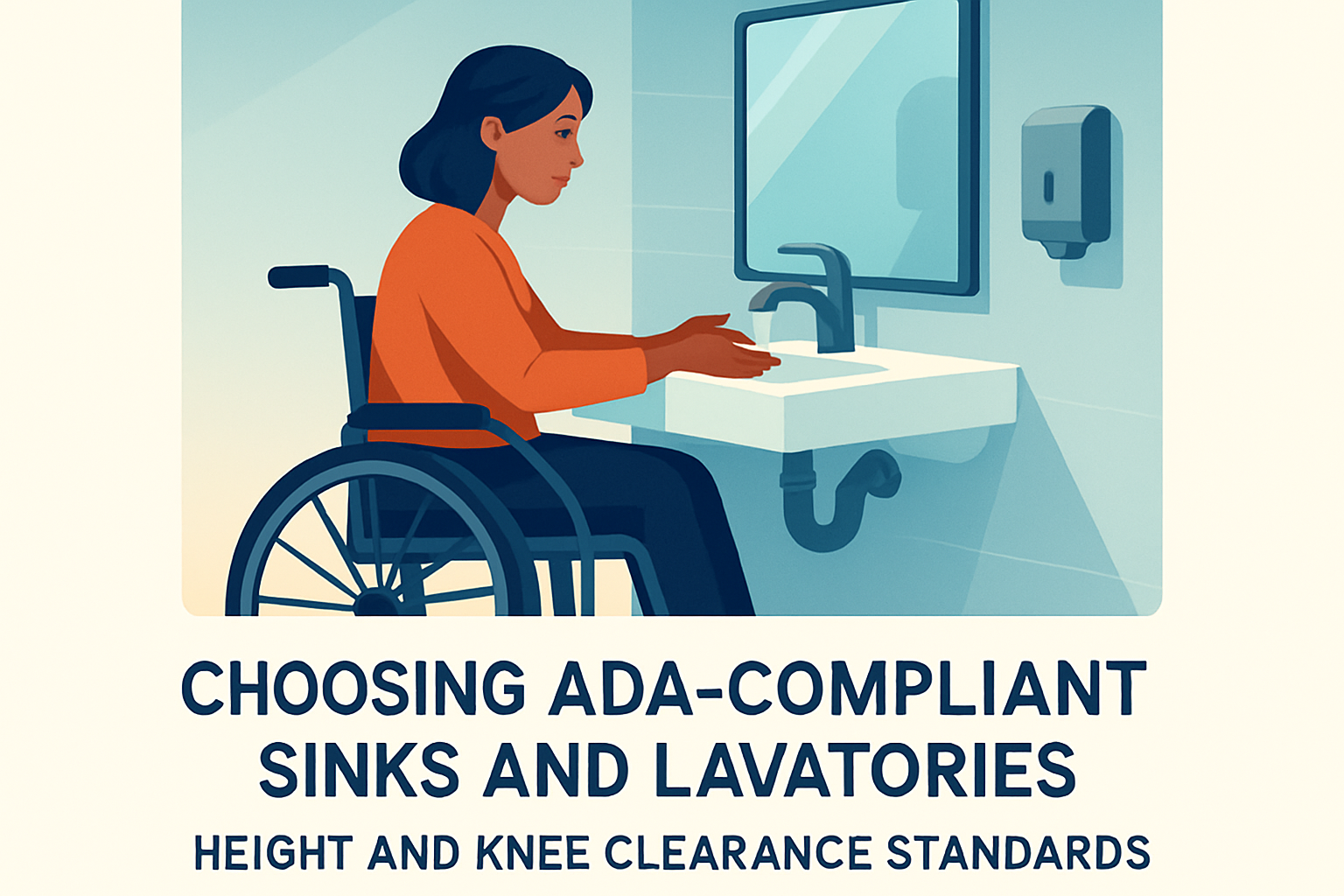
One of the fundamental requirements of ADA-compliant sinks is ensuring the correct height for ease of use. According to the ADA Standards for Accessible Design, the height of lavatories and sinks should not exceed 34 inches from the floor to the highest point of the rim or countertop surface. This height ensures that wheelchair users can access the sink without undue strain. Ensuring the right height is a simple yet incredibly effective way to create a more inclusive environment.
Consider the example of a newly constructed public library that aims to be a beacon of accessibility in its community. By complying with the ADA’s height requirements, the library ensures all visitors can comfortably use its restrooms. Such thoughtful compliance demonstrates the library’s commitment to inclusivity and its understanding of community needs.
Knee Clearance: Essential Space for Accessibility
Knee clearance is critical for allowing individuals who use wheelchairs to approach and use sinks comfortably. The ADA mandates a specific amount of knee clearance under sinks and lavatories: a minimum of 27 inches of height from the finish floor to the underside of the sink. Additionally, there’s a requirement for 11 to 25 inches of clear space from the front edge to the point where the knees meet the sink base, with about 8 inches of depth. These measurements ensure that the knees and feet of a user in a wheelchair are not obstructed, allowing for practical and comfortable usage.
| Requirement | Measurement |
|---|---|
| Maximum Sink Height | 34 inches |
| Knee Clearance Height | 27 inches |
| Knee Clearance Depth | 8 inches |
| Greater Clearance Depth | 11-25 inches |
For instance, a large shopping mall installs ADA-compliant sinks following the specific knee clearance measurements. This precise allocation of space under each sink ensures that all patrons have equal access to restroom facilities, demonstrating the mall’s commitment to providing an inclusive shopping experience for everyone.
Considerations for Choosing the Right Sink Design
When choosing ADA-compliant sinks, design considerations play a significant role alongside the technical requirements. Not only must a sink meet height and knee clearance standards, but it should also fit seamlessly into the overall restroom aesthetics and functionality. Selecting sinks that accommodate all users’ needs while maintaining a clean and welcoming design is crucial. Available options include wall-mounted sinks and floor-standing units that cater well to ADA standards.
A good example is a high-end restaurant that has succeeded in integrating ADA compliance with top-tier design. The restaurant opted for wall-mounted sinks, which not only meet ADA requirements but also contribute to a sleek, modern look. The choice reflects an understanding of how functionality and design can coexist without compromising accessibility.
Overcoming Common Challenges in ADA Sink Installation
Implementing ADA standards in existing or new spaces can pose several challenges. Space constraints, especially in older buildings, can make it difficult to achieve the required clearances and dimensions. Moreover, balancing budget constraints with the purchase of compliant fixtures requires careful planning and decision-making.
For instance, renovating a century-old building into a community center required extensive planning to install ADA-compliant restrooms within the confines of existing architectural limitations. By working with ADA specialists and choosing effective solutions, such as adjustable-height sinks, the renovators successfully created a friendly and accessible space without compromising the building’s historic character.
Trends in ADA-Compliant Sink Designs
The field of ADA-compliant sink design is evolving, with innovations that blend utility with style. Manufacturers are continuously developing new designs that not only meet ADA standards but also enhance the aesthetic appeal of restrooms. Features such as touchless faucets, automatic soap dispensers, and integrated accessibility symbols are becoming increasingly popular.
Consider the example of a tech-savvy office building incorporating these cutting-edge designs to distinguish itself as a leader in modern and inclusive workplace environments. The installation of touchless, knee-clearance-friendly sinks aims to appeal to all users while simultaneously setting a benchmark for future developments.
The Importance of Hiring Experts for Installation
Hiring trained professionals for installing ADA-compliant sinks is vital to ensure adherence to all required standards. Contractors and designers familiar with ADA specifications can foresee and navigate potential issues, offering guidance that transcends basic installation. They can ensure that all elements, from plumbing to aesthetics, meet the designated requirements.
For instance, a school district undertaking a large-scale renovation might engage experts to ensure all new restroom facilities meet ADA standards. Through professional guidance and precise installation, the initiative is able to ensure compliance as well as a welcoming environment for all students and staff, regardless of physical ability.
Practical Implementation of ADA Standards Across Various Venues
Implementing ADA-compliant sinks should be a priority in various venues, from educational institutions to hospitality and retail spaces. Each venue type brings its own set of requirements and challenges, requiring thoughtful adaptation of standards to specific contexts.
For example, a busy airport may face unique challenges integrating ADA standards due to high traffic volumes and security constraints. Yet, by carefully planning the installation of ADA-compliant sinks, airports can improve accessibility without causing disruptions. This stands as a testament to the importance of blending thoughtful planning with dedicated expertise.
Conclusion: Creating Inclusive Spaces
The journey to creating ADA-compliant restrooms involves understanding the critical standards for sink height and knee clearance. By focusing on these dimensions, stakeholders in architecture and design can significantly enhance the accessibility of public spaces, ensuring they serve community-wide needs effectively. Implementing these standards isn’t simply a matter of regulatory compliance—it is an ethical commitment to inclusivity and respect for diversity.
As we have discussed through various examples, from libraries to shopping malls and restaurants, each organization can take responsibility for ensuring their spaces are inclusively designed. Embracing ADA standards in sink and lavatory designs ultimately fosters environments where everyone can engage independently and with dignity. Moving forward, prioritizing inclusivity should be at the forefront of any design or renovation project, as it reflects a commitment to equal opportunity for all.
For those embarking on the journey to create or renovate accessible spaces, the message is clear: design with intent and inclusivity in mind. Evaluate your current facilities, collaborate with experts, and invest in high-quality, ADA-compliant fixtures that align with the principles of universal design. By doing so, you not only meet legal requirements but also champion a future where accessible environments are the norm, not the exception.
Frequently Asked Questions
1. What are the height requirements for ADA-compliant sinks and lavatories?
When designing an ADA-compliant bathroom, one of the essential considerations is meeting the prescribed sink and lavatory height standards set by the Americans with Disabilities Act (ADA). These guidelines ensure that sinks are accessible to all individuals, including those who use wheelchairs. According to ADA standards, the maximum height for a sink or lavatory should be 34 inches above the floor. This specific measurement is crucial because it allows individuals in wheelchairs to comfortably use the sink without straining or having to reposition excessively. In addition to this maximum height requirement, it is also important to ensure that the sink or lavatory is mounted securely and is stable, as individuals may use them for support. Careful attention to these standards not only fosters a more inclusive environment but also ensures compliance with legal regulations that aim to support individuals of all physical capabilities.
2. What are the knee clearance requirements under the ADA for sinks and lavatories?
Knee clearance is an important aspect of ensuring bathroom accessibility, particularly for users who are in wheelchairs. ADA standards specify that there must be sufficient space beneath sinks and lavatories to accommodate the knees and feet of a seated user comfortably. The minimum knee clearance required is 27 inches from the floor to the underside of the sink. Additionally, the depth of the knee clearance should extend at least 8 inches back from the edge of the sink. The inclusion of this space ensures that wheelchair users can approach the sink and position themselves directly in front of it without any obstructions. Moreover, the area beneath the sink should be free from any unnecessary piping or obstructions that might infringe on this space, allowing for easier access and increased comfort. Providing adequate knee clearance not only fulfills ADA compliance but also reflects a commitment to creating universally accessible spaces.
3. How can one ensure that the plumbing fixtures under the sink meet ADA standards?
Ensuring ADA compliance for the plumbing fixtures under a sink is crucial in preventing accidents and facilitating ease of use for everyone. To meet ADA standards, it’s important that all plumbing fixtures, such as pipes and drains, are installed so as not to interfere with the required knee and toe clearance below the sink. Ideally, these components should be insulated to prevent hot surfaces from causing burns to the users. In addition, the placement of pipes and other fixtures should be strategic, avoiding any protruding elements that could impede maneuverability or pose a safety risk. Utilizing shallow sink installations and compact plumbing configurations can help achieve these requirements. Incorporating a shroud to cover piping is also a popular approach, as it provides a clean appearance while protecting users from possible hazards. By considering the placement and insulation of plumbing components, designers can enhance both safety and accessibility, adhering to ADA standards effectively.
4. What are the recommended considerations when selecting materials and finishes for ADA-compliant sinks?
Choosing materials and finishes for ADA-compliant sinks involves more than aesthetics; it requires consideration of functionality, durability, and hygiene. The materials used should be resilient, capable of withstanding frequent use, and easy to clean to maintain a sanitary environment. Stainless steel, solid surfaces, and vitreous china are popular choices for their durability and low maintenance properties. Moreover, the finishes should be smooth and non-porous to facilitate easy cleaning and to prevent bacterial growth. It’s also essential to consider the finish’s reflective quality, ensuring there’s no glare that can affect visibility for users. Additionally, tactile elements should be simplified so as not to confuse visually impaired individuals who may use touch as a primary sense. Incorporating these considerations not only ensures ADA compliance but elevates user experience by combining form and function effectively in bathroom design.
5. How does one balance aesthetics with functionality when designing ADA-compliant sinks?
Finding a balance between aesthetics and functionality when designing ADA-compliant sinks is a vital aspect of inclusive bathroom design. To achieve this balance, designers can explore a variety of sink models and styles that cater to both visual appeal and requisite accessibility standards. For instance, integrating sleek and modern sink designs with clean lines can provide a contemporary look while still adhering to ADA requirements. Customization options such as color, shape, and finishes allow designers to tailor the design to suit the overall decor without compromising the need for accessibility. Trade-offs may include opting for wall-mounted sinks, which offer a minimalist aesthetic as well as the necessary knee clearance for wheelchair accessibility. It’s important to ensure that faucets and handles are easy to operate, with lever-type controls being an attractive and practical choice. The ultimate goal is to create a space that feels welcoming and inclusive, harmonizing beauty with essential functionality to cater to a diverse range of users.