
Planning and executing public events involve countless moving pieces, and one critical element that should never be overlooked is compliance with the Americans with Disabilities Act (ADA). Ensuring that your event is accessible to everyone, including individuals with disabilities, is not just a legal obligation but also a gesture of inclusivity and respect. The ADA was enacted in 1990 and mandates that public entities and private businesses provide equal opportunities and access to persons with disabilities. This legislation affects everything from physical spaces to communication methods and beyond.
Understanding ADA compliance for public events can seem daunting. There are many facets to consider, from structural requirements to auxiliary aids. However, breaking it down into manageable sections can make the task far less intimidating. No matter the size or type of event, whether it’s a community festival, a business conference, or a concert, adhering to ADA requirements is essential not only for legal reasons but also for the welfare and inclusion of all participants.
This article will provide a comprehensive overview of ADA compliance guidelines specifically targeted for public events. We’ll walk you through the requirements, best practices, and resources available to ensure your event is not only compliant but welcoming to individuals with disabilities. By understanding and implementing these guidelines, you can create an inclusive environment that allows everyone to engage, participate, and enjoy the activities you have planned.
Understanding ADA Requirements
The ADA is divided into several titles that cover various aspects of public life, but for public events, Title II (Public Entities) and Title III (Public Accommodations and Commercial Facilities) are the most relevant. Title II applies to state and local government services, while Title III addresses private entities that own, lease, or operate places of public accommodation.
One of the primary requirements under ADA is ensuring physical accessibility. This means that facilities should be navigable for individuals who use mobility devices such as wheelchairs or walkers. Elements like ramps, handrails, and accessible restrooms are critical components. Furthermore, entrance doors need to be wide enough and easily operable for attendees with disabilities.
However, ADA compliance is not limited to physical aspects. Equally important are auxiliary aids and services that ensure effective communication. These could include services like sign language interpreters, assistive listening devices, or alternative formats for written materials (e.g., Braille or large print). It’s also vital to have signage that is clear, visible, and understandable for individuals with various types of disabilities.
The ADA also mandates reasonable modifications to policies, practices, and procedures to avoid discrimination. For instance, if there are seating arrangements, efforts should be made to ensure that persons with disabilities can sit with their friends or family members.
Planning and Pre-event Preparation
The planning phase is crucial for ADA compliance as it sets the groundwork for all activities that follow. Start by conducting a thorough assessment of the event location to identify any potential barriers. This can often be done through a walkthrough with a checklist or by consulting accessibility experts.
If the venue is not inherently accessible, consider investing in temporary measures such as portable ramps or renting accessible restrooms. It’s essential to understand that what works for one event may not work for another, so customization based on the event’s specific needs is often necessary.
Once the physical layout is sorted, focus on preparing auxiliary aids and services. As mentioned earlier, this could involve hiring sign language interpreters or acquiring assistive listening systems. Publish information about the availability of these aids in all promotional materials and registration forms to inform potential attendees.
Finally, training your staff and volunteers on ADA guidelines and the use of auxiliary aids is vital. They should be well-versed in how to assist individuals with various disabilities and be knowledgeable about the location of accessible amenities within the venue. Proper training will ensure that any issues can be resolved quickly and efficiently, making the event a seamless experience for all attendees.
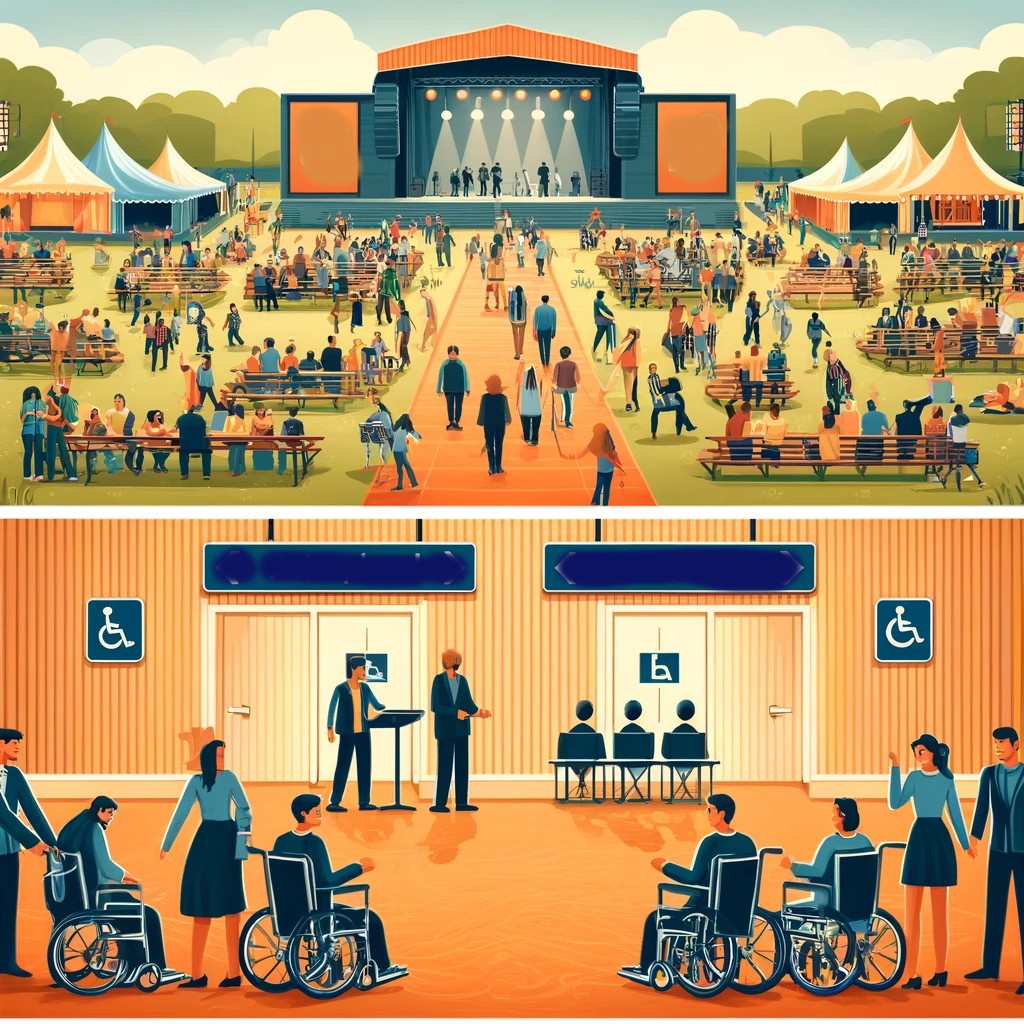
On-the-Day Event Management
On the day of the event, having a plan in place to handle accessibility is key to smooth operations. Establish an easily accessible help desk or information booth where attendees with disabilities can get assistance. Ensure this is staffed by individuals trained in ADA compliance.
Regular checks throughout the event can preemptively address any issues that arise. This might involve ensuring that accessible pathways are clear, ramps are secure, and auxiliary aids are functioning correctly. Conduct quick spot-checks frequently to ensure compliance and to deal with any unforeseen challenges swiftly.
In case something goes wrong, having a rapid response team on hand can make all the difference. This team should be equipped to handle a variety of issues, from technical malfunctions to providing additional assistance for individuals with disabilities. Quick and effective communication within the team is crucial.
Don’t forget about the value of feedback. Open a channel for attendees to provide real-time feedback about accessibility. Whether it’s through a dedicated phone line, a mobile app, or staff on the ground, being responsive to concerns as they arise shows a commitment to inclusivity and can improve the experience for everyone.
Post-event Review and Follow-Up
Once the event concludes, the work isn’t done. Conduct a thorough review of the event’s accessibility measures and document what worked and what didn’t. Gather feedback from attendees, staff, and volunteers to get a holistic view of the event’s success in terms of ADA compliance.
Analyze the feedback and identify areas for improvement. Were there any logistical issues that need addressing? Was the response team adequately prepared? Did the auxiliary aids meet the needs of attendees? Answering these questions will give you a clear picture of where improvements are needed.
Sharing the findings and lessons learned with your team is a critical part of the follow-up process. This not only educates them but also sets the stage for a more compliant and inclusive event in the future. Keep a record of all measures taken, feedback received, and changes implemented for reference in future events.
In some cases, it may be beneficial to consult with ADA experts or organizations specializing in disability rights to gain additional insights. They can provide a fresh perspective and suggest improvements that you might not have considered. Building a relationship with such entities can be advantageous for your future events as well.
Resources and Tools
There are numerous resources available to help guide you in making your event ADA compliant. The U.S. Department of Justice (DOJ) and the ADA National Network offer extensive materials and support. Their websites feature guidelines, checklists, and contact information for regional ADA centers that can provide personalized assistance.
Utilizing technological tools can also simplify the process. Apps and software designed for event planning often include features to help ensure accessibility. These tools can assist with tasks like mapping out accessible routes, managing auxiliary aids, and tracking compliance with ADA guidelines.
Another valuable resource is local disability advocacy groups. These organizations have a deep understanding of the needs of the disability community and can provide firsthand insights. Engaging with these groups can help you better understand the practical challenges faced by individuals with disabilities and how best to address them.
Lastly, don’t underestimate the value of peer learning. Many organizations and event planners willingly share their experiences and best practices when it comes to ADA compliance. Networking with other professionals in your field can provide you with practical tips and advice, further enhancing your ability to create accessible and inclusive events.
Conclusion
Ensuring ADA compliance for public events is both a legal requirement and a moral imperative. By creating an inclusive environment, you not only adhere to the law but also foster a sense of community and belonging for all attendees. Remember, ADA compliance is not about ticking boxes but genuinely accommodating the needs of individuals with disabilities.
From understanding the legal framework and conducting pre-event preparations to managing the day-of operations and post-event reviews, there are multiple steps involved in achieving full compliance. Each step is a building block toward creating an event that is accessible to all, regardless of their abilities.
Investing the time and resources to ensure ADA compliance can seem challenging, but the rewards far outweigh the effort. An accessible event is not only a successful event but also a reflection of an organization’s commitment to inclusivity and equality.
By leveraging available resources and continuously striving to improve, you can master the complexities of ADA compliance and set a standard for others to follow. Future attendees, staff, and volunteers will undoubtedly appreciate your efforts, making your events not only compliant but genuinely welcoming for all.
Frequently Asked Questions
1. What is ADA Compliance, and why is it important for public events?
ADA Compliance refers to adhering to the standards set by the Americans with Disabilities Act, which ensures that individuals with disabilities have equal access and opportunities in various aspects of public life, including events. It’s crucial for public events because it promotes inclusivity and respect for all individuals, regardless of their abilities. By making your event ADA compliant, you’re not only fulfilling a legal requirement but also actively demonstrating commitment to social responsibility and diversity. This approach can enhance your event’s reputation, attract a more diverse audience, and create an inclusive atmosphere where everyone feels welcome and valued.
2. What specific areas should I pay attention to for ADA compliance at my event?
When planning an ADA-compliant public event, there are several key areas to focus on. First, consider the physical accessibility of your venue. This includes ensuring there are ramps or elevators for mobility devices, accessible restrooms, and designated parking spaces that meet ADA guidelines. Secondly, address communication accessibility by providing accommodations like sign language interpreters, assistive listening devices, or real-time captioning for attendees with hearing impairments. Thirdly, ensure programmatic accessibility, which involves making event materials available in alternative formats such as Braille or large print, and providing clear signage throughout the event. It’s also wise to have staff trained and aware of ADA requirements to assist persons with disabilities effectively. Thoroughly assessing and preparing these areas will help you create an all-inclusive event setting.
3. How can I ensure my event’s website is compliant with ADA standards?
Your event’s website plays a crucial role in ensuring ADA compliance, as it is often the first point of contact for potential attendees. To ensure compliance, start by implementing Web Content Accessibility Guidelines (WCAG) which provide a robust framework for digital accessibility. This includes ensuring all images have descriptive alt text, using a consistent and readable layout, providing transcripts for audio content, and making sure your site can be navigated using a keyboard alone. Additionally, conduct regular accessibility audits using tools that simulate screen reader experiences to identify and address any areas of improvement. By taking these steps, your event website will be fully accessible, allowing individuals with disabilities to access information and resources with ease.
4. What should I include in my event invitation to address ADA accessibility?
When designing your event invitation, it’s important to highlight ADA accessibility features clearly to ensure all potential attendees are informed about the accommodations available. Start by explicitly stating that your event is ADA compliant and detail the specific accommodations provided, such as wheelchair-accessibility, sign language interpreters, or assistive listening devices. Include contact information for an accessibility coordinator who can address any questions or specific accommodation requests attendees might have. Moreover, encourage guests to communicate their specific needs ahead of time, which allows you to make any necessary adjustments for a more personalized inclusive experience. This proactive communication not only reinforces your commitment to accessibility but also helps build trust and confidence among attendees with disabilities.
5. What steps should I take during an event to maintain ADA compliance?
Ensuring ADA compliance doesn’t stop at the planning stage; it’s crucial to maintain it throughout the event as well. Begin by having trained personnel or volunteers available to assist guests with disabilities and address any accessibility issues promptly. Regularly check facilities like ramps and restrooms to confirm they’re unobstructed and functioning properly. Ensure that reserved seating for individuals with disabilities and their companions is clearly marked and easily accessible. Plan for contingency measures such as backup accommodations for unexpected needs, like additional seating or auxiliary aides. It’s also beneficial to gather feedback from attendees regarding the accessibility of your event, which can inform improvements for future events. Maintaining ADA compliance in real-time not only enhances the experience for guests with disabilities but sets a positive precedent for how accessibility is managed at your events.


