In today’s world, accessibility is a critical consideration in the design of public spaces. One key aspect of accessibility is ensuring that toilet stalls are usable by individuals with disabilities. Accessible toilet stalls, often referred to as ADA-compliant stalls, ensure that all individuals, regardless of their physical abilities, can use the restroom facilities comfortably and safely. The concept of accessibility here means that facilities are designed with the understanding of diverse user needs, ranging from wheelchair users to individuals with other mobility aids.
The importance of accessible toilet stalls extends beyond mere compliance with legal standards. It impacts the quality of life for individuals who require them. Key terms such as “clearance” and “dimensions” refer to the spatial area available within the stall and the measurements that define its size and structure. This article will delve into why accessible toilet stalls matter and how clearances and dimensions play a crucial role in their usability.
The Legal Framework: ADA Compliance
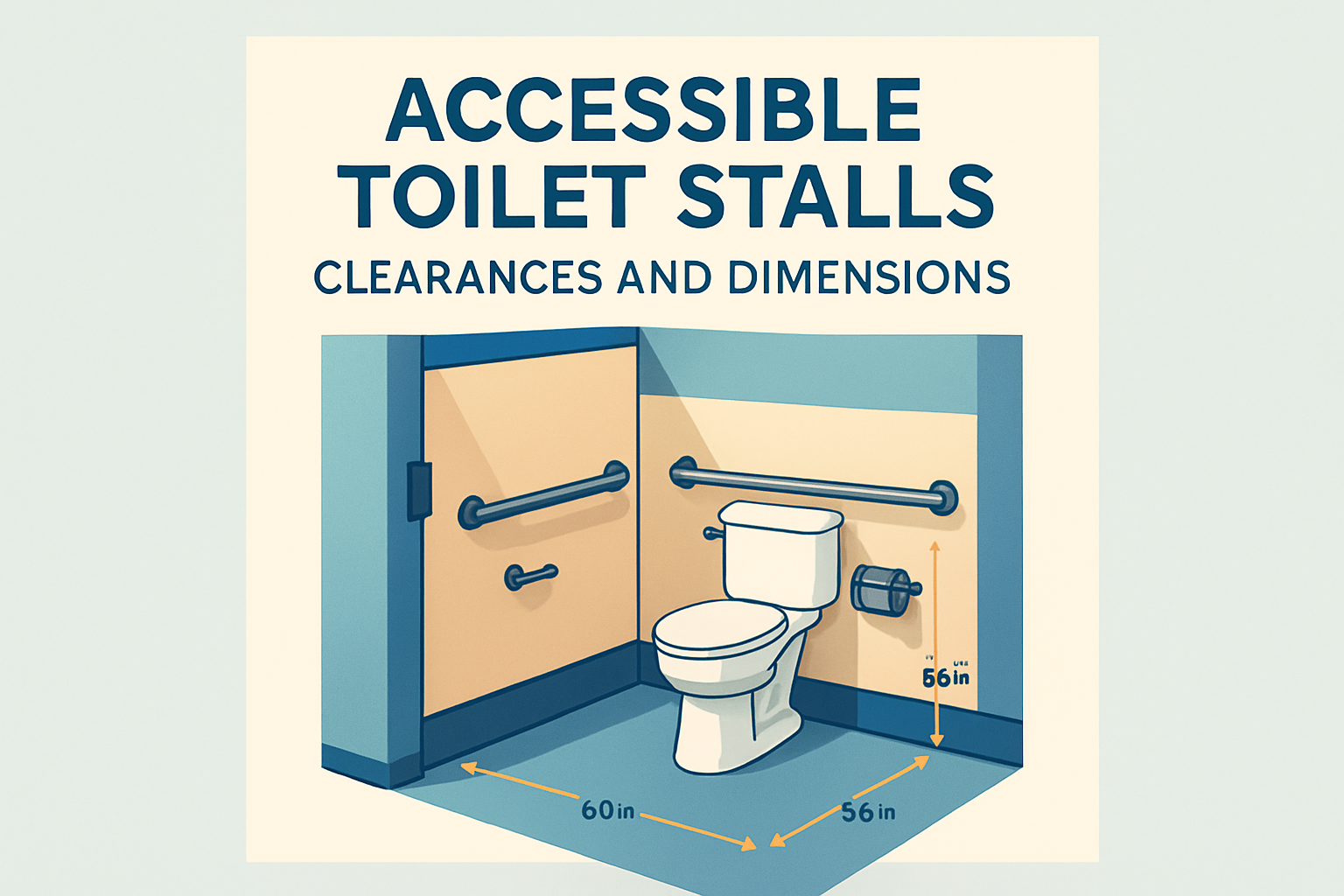
The Americans with Disabilities Act (ADA) provides comprehensive guidelines for the design of accessible facilities across public spaces in the United States. When it comes to toilet stalls, the ADA outlines specific requirements for space, design, and accessibility features. For instance, an ADA-compliant toilet stall must have a width of at least 60 inches and provide sufficient maneuvering space for a wheelchair to enter and turn within the stall. Additionally, the height of toilet seats and grab bars must meet specified requirements to assist users.
Consider a busy airport restroom, where the flow of people is constant. An accessible stall designed according to ADA standards ensures that travelers with disabilities do not face additional challenges. This is crucial not only from a usability standpoint but also in promoting an inclusive society that respects and accommodates diversity.
Understanding Stall Dimensions
Dimensions of accessible toilet stalls are critical to their functionality. The standard dimension for an accessible stall is approximately 60 inches wide by 59 inches deep. However, configurations can vary depending on the building layout. At least 17 to 19 inches of space is required for the toilet seat height. Such precise dimensions ensure that there’s enough space for wheelchairs or other mobility aids.
Imagine a scenario in a restaurant where patrons frequently move in and out. An accessible toilet with adequate dimensions allows a smooth transition for users from wheelchairs to the toilet and vice versa, minimizing discomfort or inconvenience. Proper dimensions are vital in reducing the risk of accidents and maintaining the dignity of users.
Clearance and Maneuverability
Clearance is another fundamental aspect of accessible toilet design. Clearance refers to the unobstructed space that allows a person to move freely within the stall. For instance, a front clearance of at least 48 inches is necessary to allow ease of movement. Additionally, the space for entering and exiting the stall is crucial. The door should swing outwards to prevent obstructions and allow adequate space inside.
Consider a public university’s restroom designed for accessibility. Students with disabilities can maneuver their wheelchairs easily within stalls, thanks to the generous clearance spaces. Thus, clearance plays a significant role in promoting independence and reducing reliance on others for assistance.
Features Enhancing Accessibility
Beyond dimensions and clearances, additional features enhance the usability of accessible stalls. Grab bars are essential for stability, especially for individuals with limited mobility. Mirrors and dispensers should be placed at a height that is easily reachable from a seated position. Moreover, the stall door latch should be operated with minimal force to accommodate users with limited arm strength.
| Feature | Specification |
|---|---|
| Grab Bars | 33-36 inches above the floor |
| Toilet Paper Dispenser | 7-9 inches in front of the toilet, not higher than 54 inches from the floor |
| Door Handles | Easy to operate with one hand |
In corporate office buildings, incorporating these features ensures that all employees, regardless of physical ability, have equal access to restroom facilities. The presence of these features reflects an organization’s commitment to fostering an inclusive workplace environment.
The Role of Designers and Architects
Designers and architects play a pivotal role in creating accessible spaces. They must consider not only the spatial layout but also the materials and aesthetic details that contribute to the usability and comfort of accessible stalls. Collaborating with accessibility experts can provide insights into user needs and enhance stall designs accordingly.
For example, a newly constructed shopping mall can benefit from input by accessibility consultants during the design phase. This collaboration ensures stalls are optimally designed to accommodate a variety of needs, resulting in heightened customer satisfaction and loyalty.
Challenges in Implementing Guidelines
Despite clear guidelines, implementing ADA-compliant stalls presents challenges. Existing buildings may face spatial limitations that hinder the retrofitting of accessible stalls. Budget constraints can also pose a challenge, particularly for small businesses. However, overcoming these obstacles is necessary to provide equitable access for all individuals.
Consider a historical site adaptation project that aims to retrofit accessible stalls into a century-old building. This requires creative architectural solutions to preserve the site’s integrity while providing modern accessibility. Overcoming such challenges highlights the societal commitment to inclusivity.
Conclusion: Taking Action Towards Inclusivity
Accessible toilet stalls are essential components of public infrastructure. They ensure dignity, independence, and safety for individuals with disabilities. Understanding the importance of clearances and dimensions in designing these stalls is crucial for architects, business owners, and policy makers alike. Adhering to ADA guidelines and incorporating inclusive designs reflect a commitment to creating a society that values all individuals.
The key takeaway is that accessibility is not an option but a responsibility towards equal treatment. Prioritizing accessible restroom facilities enhances the overall user experience and underscores a broader commitment to inclusivity. As readers, you are encouraged to advocate for accessibility in public spaces, support initiatives that promote inclusivity, and ensure compliance with standards in your spheres of influence.
Take the next step by auditing your facilities for accessibility. Consider engaging with experts to identify improvements and implementing necessary changes. In doing so, you will contribute to a more inclusive environment that welcomes everyone.
Frequently Asked Questions
1. What are the standard dimensions for an accessible toilet stall?
When it comes to accessible toilet stalls, following precise measurements is essential to ensure they can accommodate individuals with various disabilities comfortably. According to the ADA standards, the basic requirement for an accessible toilet stall is a minimum width of 60 inches (1525 mm) and a minimum depth of 56 inches (1420 mm) if it is wall-mounted or 59 inches (1500 mm) if the toilet is floor-mounted. These dimensions provide adequate space for maneuvering, especially for individuals using wheelchairs or other mobility aids.
Moreover, clearance around the toilet is crucial. The centerline of the toilet must be situated between 16 to 18 inches (405-455 mm) from the sidewall to facilitate transfers from a wheelchair to the toilet seat. Additionally, the stall needs to feature a clear space of at least 48 inches (1220 mm) in front of the toilet to allow for forward movement. This ample space ensures ease of access and safety for a user to navigate without constraint.
2. Why is it important for toilet stalls to meet ADA compliance?
Ensuring that toilet stalls meet ADA compliance is vitally important for several reasons. First and foremost, ADA compliance promotes inclusivity and equal access. Individuals of all abilities deserve the opportunity to use restroom facilities without hindrance or discomfort. By adhering to these standards, facilities send a strong message about valuing every individual’s rights and facilitating an environment of inclusivity.
From a legal standpoint, non-compliance with ADA standards can result in significant fines and potential lawsuits. Compliant facilities protect themselves from liability issues related to discrimination or inaccessibility claims.
Finally, it’s a matter of practicality and reputation. Facilities that prioritize accessibility show themselves to be forward-thinking and considerate, which can significantly enhance their public image and customer satisfaction.
3. What are the requirements for door clearances in accessible stalls?
Accessible toilet stall doors have specific requirements to ensure ease of access and maneuverability. The door should open outwardly, allowing users to back into the stall using wheelchairs without encountering resistance or space constraints. Ideally, the clear width of the door opening should be no less than 32 inches (815 mm). This facilitates entry and exit for individuals with varying mobility aids.
Moreover, the stall door should be equipped with an accessible latch that can be easily operated with one hand without the need for tight grasping, pinching, or twisting of the wrist, ensuring ease of use for everyone. To enhance privacy and accessibility, the door should close with minimal force and should have a smooth, even surface with no abrupt protrusions to avoid safety risks to users or potential damage to mobility devices.
4. What also needs to be included in accessible toilet stalls?
Apart from dimensions, several essential features must be incorporated into an accessible toilet stall to meet ADA standards. Grab bars are a critical component that provides users with support while transferring, sitting, or standing. These bars should be strategically placed along the sidewall and behind the toilet. The side wall grab bar should be at least 42 inches (1065 mm) long, while the back wall grab bar needs to be a minimum of 36 inches (915 mm) long. They both must be mounted 33 to 36 inches (840 mm-915 mm) off the stall floor to ensure they are within reach of individuals seated on the toilet.
Additionally, accessible toilet paper dispensers must be conveniently located and operable with one hand without straining or overreaching. Ideally, they should be mounted between 15 inches (380 mm) and 48 inches (1220 mm) above the floor and no more than 7-9 inches (180 mm-230 mm) from the leading edge of the toilet. Following these guidelines is crucial to provide users with a wholly accessible experience.
5. How often do accessible facilities need to be inspected or updated?
The frequency of inspections or updates for accessible facilities can vary based on the facility’s usage, location, and condition. However, it’s prudent for facilities to conduct at least an annual review to ensure all features are in good working order and remain compliant with the latest ADA standards. Over time, wear and tear or changes in regulations might necessitate updates or repairs.
Regular upkeep can uncover maintenance needs, such as tightening or replacing loose grab bars, ensuring doors close properly, or checking the functionality of accessible locks and hardware. By being proactive, facilities can avoid costly repairs and ensure their accommodations consistently meet the needs of all users. Maintaining a schedule not only ensures continued compliance but also sustains the facility’s commitment to offering a safe, accessible environment for everyone.