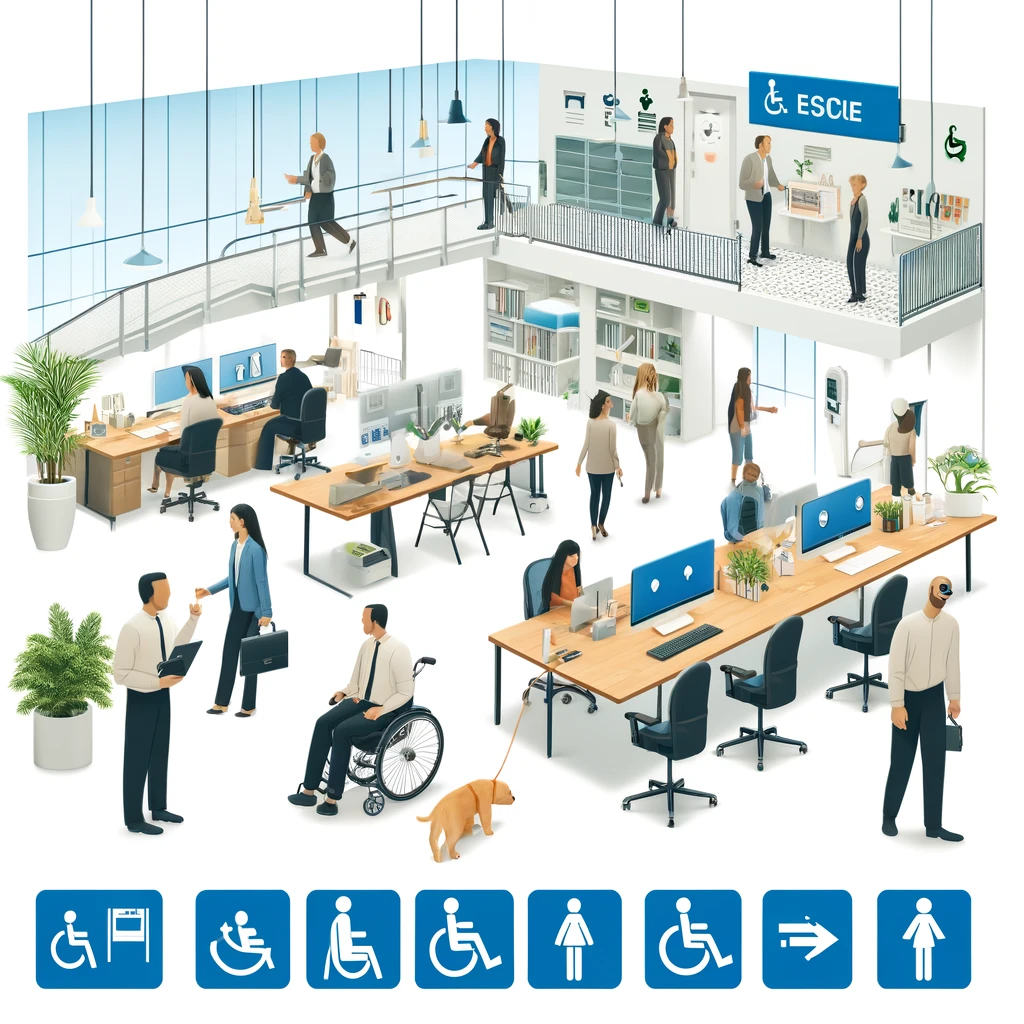
Ensuring that your business is compliant with the Americans with Disabilities Act (ADA) is crucial not only for legal compliance but also for creating an inclusive environment for customers and employees. This checklist provides a structured approach to assess and improve various aspects of your business in line with ADA standards.
Physical Accessibility
- [ ] Parking and Exterior Paths: Ensure there are adequate accessible parking spaces, with appropriate signage and accessible routes to the building.
- [ ] Entrances and Exits: Check that all public entrances are wheelchair accessible, with doors wide enough for easy passage.
- [ ] Interior Accessibility: Confirm that hallways, aisles, and spaces between furniture allow for mobility device navigation.
- [ ] Elevators and Ramps: Ensure elevators are present in multi-story buildings and ramps are available where there are level changes.
Facilities and Equipment
- [ ] Restrooms: Verify that restrooms are accessible, including toilet stalls, sinks, and dispensers.
- [ ] Service Counters and Tables: Ensure that counters and tables are at an accessible height.
- [ ] Signage: Confirm that signs are legible, with Braille and raised characters where necessary.
Communication and Web Accessibility
- [ ] Effective Communication: Implement policies for effective communication with individuals who have hearing, vision, or speech disabilities.
- [ ] Website Accessibility: Ensure your website is accessible, following Web Content Accessibility Guidelines (WCAG).
Employment Practices
- [ ] Job Descriptions: Ensure they are inclusive and specify essential functions.
- [ ] Recruitment Process: Make the application process accessible and provide accommodations as needed.
- [ ] Workplace Accommodations: Establish a process for providing reasonable accommodations to employees with disabilities.
Policies and Training
- [ ] Non-Discrimination Policies: Review policies to ensure they include non-discrimination on the basis of disability.
- [ ] Employee Training: Conduct regular training for staff on ADA compliance and how to interact with people with disabilities.
Service Animals and Mobility Devices
- [ ] Service Animals: Ensure policies allow service animals in public areas of the business.
- [ ] Mobility Devices: Permit the use of personal mobility devices as required by the ADA.
Emergency Preparedness
- [ ] Emergency Evacuation Procedures: Include procedures for assisting individuals with disabilities during emergencies.
Continuous Evaluation
- [ ] Regular Assessments: Conduct regular audits of your business for ADA compliance.
- [ ] Feedback Mechanism: Have a system for receiving and addressing feedback or complaints related to accessibility.
Legal Compliance and Documentation
- [ ] Documentation: Maintain records of accessibility measures and accommodations provided.
- [ ] Stay Informed: Keep up-to-date with changes in ADA regulations and standards.
Conclusion
Regularly using this checklist can help ensure that your business remains compliant with ADA standards, providing a safe, accessible, and inclusive environment for all. Remember, ADA compliance is an ongoing process and reflects a commitment to inclusivity and equality.
Would you like more detailed information or additional sections to be included in this checklist?
Frequently Asked Questions
1. What exactly is the ADA Compliance Checklist and why is it important for my business?
The ADA Compliance Checklist is a comprehensive guide that helps business owners ensure their operations and facilities are in line with the Americans with Disabilities Act standards. Its primary purpose is to facilitate an inclusive environment, making sure that individuals with disabilities can access your goods, services, and facilities just as easily as everyone else. Not only does adhering to these standards prevent potential legal issues, but it also increases the reach of your business by welcoming a diverse customer base. ADA compliance demonstrates that your business values inclusivity, enhances its reputation, and possibly increases its profitability by serving a wider audience.
2. How can I make sure my business’s parking and exterior paths are ADA compliant?
Ensuring ADA compliance with parking and exterior paths starts with providing adequate accessible parking spaces. These spaces must be properly marked with the international symbol of accessibility and have a minimum width to accommodate a wheelchair-accessible van when possible. Moreover, the path leading from these parking areas to the building entrance should be smooth, level, and free from obstacles. If there are curbs, ramps must be installed with a gentle slope and fitted with handrails where required. Clear signage indicating accessible routes is essential to guide customers with disabilities seamlessly into your establishment. Regular checks and maintenance of these areas ensure ongoing compliance and accessibility for all users.
3. What should I consider regarding the entrance to my building to meet ADA standards?
To comply with ADA standards, the entrance to your building should be accessible by individuals with disabilities. This means that the door should be wide enough to accommodate wheelchairs and other mobility aids, typically no less than 32 inches clear width. Door handles should be at an accessible height and operable with one hand without the need to grasp or twist, including lever-style or automatic doors that open with a push button. Thresholds at doorways must not exceed a quarter inch in height or be beveled if they are higher, to prevent tripping or difficulties in rolling over them. Adequate lighting at the entrance is also crucial, as it ensures visibility for individuals with vision impairments. Regularly inspect doors and pathways leading to entrances to maintain accessibility over time.
4. How do bathroom facilities in my business need to be adapted for ADA compliance?
Adapting bathroom facilities for ADA compliance involves several key modifications. First, ensure there is at least one accessible stall in both men’s and women’s restrooms. This stall must have sufficient turning space for a wheelchair, usually at least 60 inches in diameter. Grab bars are essential and should be installed behind the toilet and on the nearest side wall to assist with transfers. The toilet area must allow for lateral mounting of grab bars, and the flush handle should be located on the open side of the stall for ease of access. Sink areas need to have clearance underneath to allow wheelchair access, and faucets should be operable with one hand without tight grasping or twisting. Signage marking and indicating accessible bathroom locations are crucial for individuals requiring these facilities. Consistent review and updates of restroom facilities ensure ongoing alignment with ADA standards.
5. What are some technological aspects of ADA compliance that my business should be aware of?
In today’s digital age, ADA compliance extends beyond physical spaces to include technological accessibility as well. Ensuring your website is accessible involves designing it so that individuals with disabilities can navigate, understand, and interact with the web content effectively. This includes providing text alternatives for non-text content such as images (using alt tags), providing captions for multimedia, and ensuring that the site is navigable entirely via keyboard. Additionally, the website should be compatible with screen readers and other assistive technologies. Offering user-friendly experiences aligns with the Web Content Accessibility Guidelines (WCAG), which form the basis of ADA web compliance. Regular audits and updates to your digital presence ensure that it remains accessible to all current and potential users.