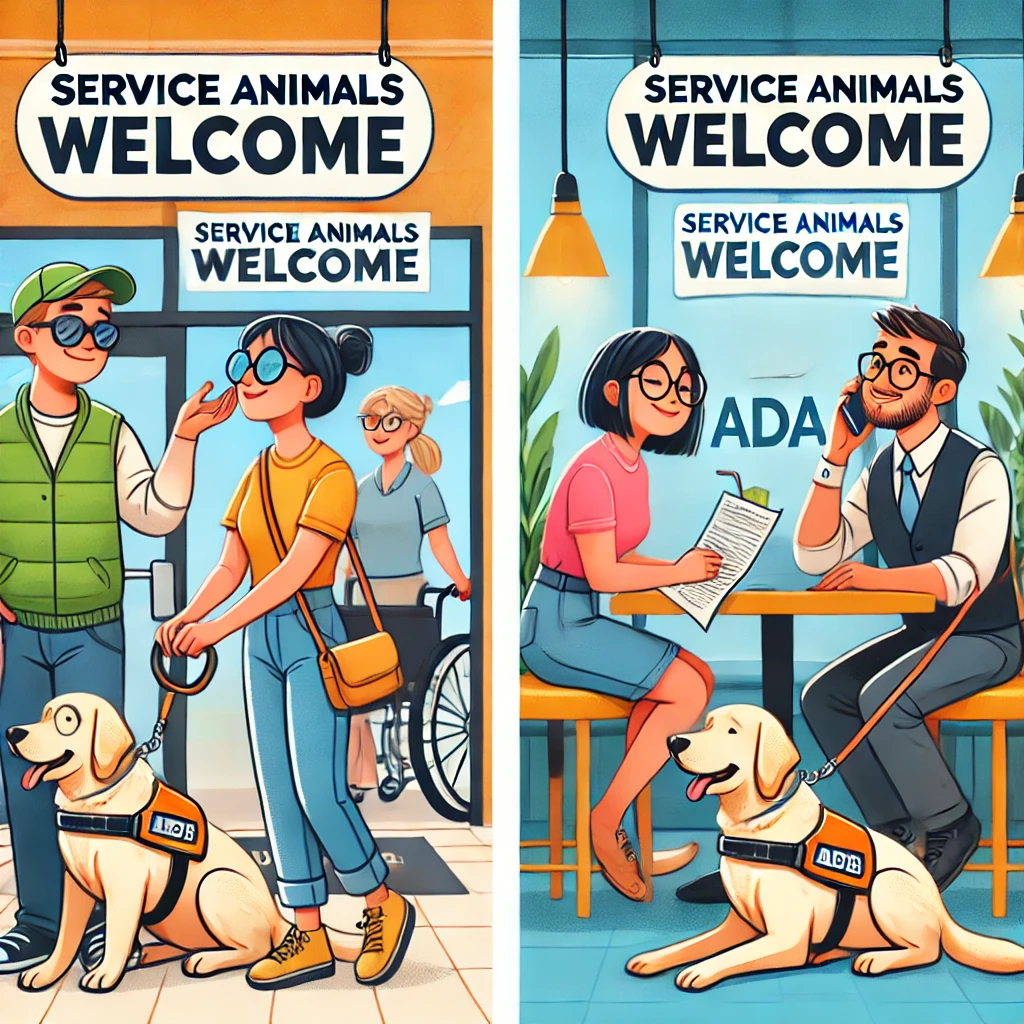
The Americans with Disabilities Act (ADA) is a cornerstone piece of civil rights legislation that was enacted in 1990. It aims to ensure that individuals with disabilities have the same rights and opportunities as everyone else. Among the various aspects of ADA compliance, one particularly critical and often misunderstood area is the regulations concerning service animals. This guide aims to provide businesses with comprehensive knowledge about ADA compliance as it pertains to service animals. Understanding and adhering to these regulations not only shows your commitment to inclusivity and equality but also helps to avoid potential legal consequences.
Service animals play an essential role in assisting individuals with disabilities by performing specific tasks that are directly related to their handler’s disability. For example, a guide dog helps visually impaired individuals navigate, while medical alert dogs can sense impending seizures. Given the critical roles these animals perform, it is mandatory under the ADA that businesses accommodate them. But what exactly does this entail for your business? This guide will walk you through the fundamental requirements, helping you to understand your responsibilities and how to properly implement ADA-compliant policies.
What Is a Service Animal?
Under the ADA, a service animal is defined as a dog that is individually trained to do work or perform tasks for a person with a disability. In some cases, miniature horses may also qualify as service animals under specific criteria. These tasks can range from guiding people who are blind to alerting individuals who are deaf, pulling a wheelchair, alerting and protecting a person who is having a seizure, reminding a person with mental illness to take prescribed medications, or calming a person with Post Traumatic Stress Disorder (PTSD) during an anxiety attack.
It is crucial to note that the ADA does not recognize emotional support animals as service animals. Emotional support, therapy, comfort, or companion animals do not qualify as service animals under the ADA because they are not trained to perform specific tasks pertaining to a disability. Business owners should be able to distinguish between service animals and pets to avoid any misunderstandings or potential legal issues.
Business Responsibilities for ADA Compliance
Businesses that serve the public are expected to comply with ADA regulations concerning service animals. This includes places like restaurants, hotels, retail stores, theaters, and healthcare facilities. Among your key responsibilities are:
- Permitting Entry: Service animals must be allowed to accompany their handlers in all areas of the facility where the public is usually allowed. You cannot deny access based on allergies or fear of the animal.
- Limited Inquiry: You may only ask two questions: “Is the dog a service animal required because of a disability?” and “What work or task has the dog been trained to perform?” You cannot request documentation or require the dog to demonstrate its tasks.
- Handling Disruptions: If a service animal is out of control and the handler does not take effective action, or if the animal is not housebroken, you have the right to request the removal of the animal. However, you must still offer services to the individual without the animal.
- Fee Policies: You cannot charge an additional fee for accommodating a service animal, nor can you treat the handler differently from other customers.
Training Employees on ADA Compliance
One of the most effective ways to ensure ADA compliance regarding service animals is through comprehensive employee training. Employees should be educated on the legal definitions and responsibilities defined by the ADA. Training programs should cover the following aspects:
- Recognizing Service Animals: Educate employees on how to identify a service animal and distinguish it from pets or emotional support animals.
- Appropriate Inquiry: Train staff on the appropriate questions to ask and how to respectfully interact with service animal handlers.
- Resolving Conflicts: Equip employees with the skills to handle potential conflicts, such as customer complaints or situations where a service animal may not behave appropriately.
- Reporting Procedures: Implement clear reporting procedures for incidents involving service animals to ensure that issues are documented and resolved effectively.
By properly training your employees, you create a more inclusive environment and mitigate risks associated with ADA non-compliance.
Implementing ADA-Compliant Policies and Procedures
Having clear and enforceable policies regarding service animals is crucial for ADA compliance. These policies should be consistently implemented across all branches and locations of your business. Here are key steps for developing and enforcing these policies:
- Policy Development: Create comprehensive policies that outline the rights and responsibilities of both the business and the individuals with service animals.
- Policy Communication: Ensure these policies are communicated effectively to all employees, possibly through regular training sessions and updated employee handbooks.
- Implementation and Monitoring: Consistently implement policies and monitor compliance through regular audits and feedback collection.
- Public Awareness: Make your ADA-compliant policies known to the public, perhaps by displaying notices at entrances or on your business website.
By having robust policies and procedures in place, you help to create a more welcoming environment for individuals with disabilities and their service animals.
Common Misconceptions and Challenges
Despite the clear guidelines provided by the ADA, there are several common misconceptions and challenges that businesses might face in complying with the service animal regulations:
- Breed Restrictions: Some businesses mistakenly believe they can impose breed restrictions on service animals. The ADA does not allow breed-specific bans.
- Documentation: Another misconception is that businesses can require proof or certification of a service animal. The only permissible inquiries are those related to the necessity of the animal and the tasks it performs.
- Employee Misunderstanding: Employees may misunderstand compliance requirements, potentially leading to conflicts. This underscores the importance of regular training and clear communication.
- Customer Concerns: Other customers might express concerns about the presence of service animals, particularly due to allergies or fear of dogs. Businesses should handle these situations sensitively while upholding ADA regulations.
Addressing these misconceptions and challenges proactively can help ensure smooth and compliant operations regarding service animals.
Conclusion
ADA compliance with respect to service animals is a vital aspect of creating an inclusive and welcoming environment for all customers. Businesses have a responsibility to understand and implement the ADA guidelines, ensuring that individuals with disabilities can have full access to public spaces along with their service animals. This involves not only permitting entry to service animals but also training your employees, developing comprehensive policies, and effectively dealing with common misconceptions and challenges.
By following the guidance provided in this article, your business can successfully navigate the complexities of ADA compliance for service animals. Remember, this is not merely about legal adherence but also about fostering an environment of equality and respect. In doing so, you’ll enhance your business’s reputation and build stronger relationships with all your customers, including those who rely on service animals for their daily living.
Frequently Asked Questions
1. What is considered a service animal under the ADA?
Under the Americans with Disabilities Act (ADA), a service animal is specifically defined as a dog that has been individually trained to perform tasks or do work for a person with a disability. The work or tasks performed by the dog must be directly related to the person’s disability. These tasks can include guiding individuals who are blind, alerting individuals who are deaf, pulling a wheelchair, alerting and protecting a person who is having a seizure, or reminding a person with mental illness to take prescribed medications. Importantly, the ADA recently made distinctions clear that other species of animals, whether wild or domestic, do not qualify as service animals. While it’s crucial for businesses to understand this definition to ensure they comply with ADA guidelines, they should also be aware that there are separate regulations that may apply to other types of support animals.
2. Are emotional support animals and therapy animals considered service animals under the ADA?
It’s a common misconception that emotional support animals and therapy animals fall under the ADA’s definition of service animals. However, this is not the case. Under the ADA, emotional support animals are not recognized as service animals, because they have not been specifically trained to perform a task related to a person’s disability. Emotional support animals provide comfort just by being with a person but do not perform specific tasks. Similarly, therapy animals provide comfort and affection to individuals in hospitals, schools, and other settings. They are not considered service animals because their tasks do not relate to assisting a person with a disability. Businesses must understand this distinction to avoid any compliance issues and to educate staff accordingly.
3. What questions can a business legally ask when it comes to service animals?
When a person with a service animal seeks to enter a business, staff are only allowed to ask two specific questions: “Is this a service animal required because of a disability?” and “What task or work has this animal been trained to perform?” It’s important to respect the privacy of individuals with disabilities, so within ADA guidelines, businesses can’t request documentation for the service animal, demand the animal perform its task, or inquire about the individual’s disability. This is done to protect the rights and dignity of individuals while ensuring businesses maintain ADA compliance. Firmly sticking to these two questions will help businesses avoid potential legal pitfalls and enhance the customer experience for all patrons.
4. Are there any circumstances under which a business can ask a service animal to be removed?
Yes, there are specific scenarios under the ADA where a business can require a service animal to leave the premises. The two main reasons are: if the animal is out of control, with its handler unable to bring it under control, or if the animal is not housebroken. For instance, if a service dog barks repeatedly and disrupts the operational environment, it could be asked to leave. However, businesses must remember they cannot deny service to the patron themselves and should offer the opportunity for the patron to obtain goods or services without the animal on-site. Businesses should train employees to manage these types of situations sensitively to remain compliant while ensuring that all guests feel welcome and accommodated.
5. How should a business prepare its staff regarding interactions with service animals?
Training is vital for equipping staff to handle interactions with service animals effectively. Employees should be educated about what constitutes a service animal under the ADA, so they understand rights, responsibilities, and legal compliance details. Training should also cover the appropriate questions to ask, rights to remove an animal, and the difference between a service animal and other animals. Clear communication guidelines should be taught, emphasizing respectfulness, confidentiality, and patron dignity. Additionally, it may be beneficial for employees to practice these interactions through role-playing scenarios to ensure comfort and confidence when engaging with individuals who have service animals. When staff are well-informed and confident, businesses can avoid misunderstandings and enhance the overall experience for both employees and patrons with service animals.