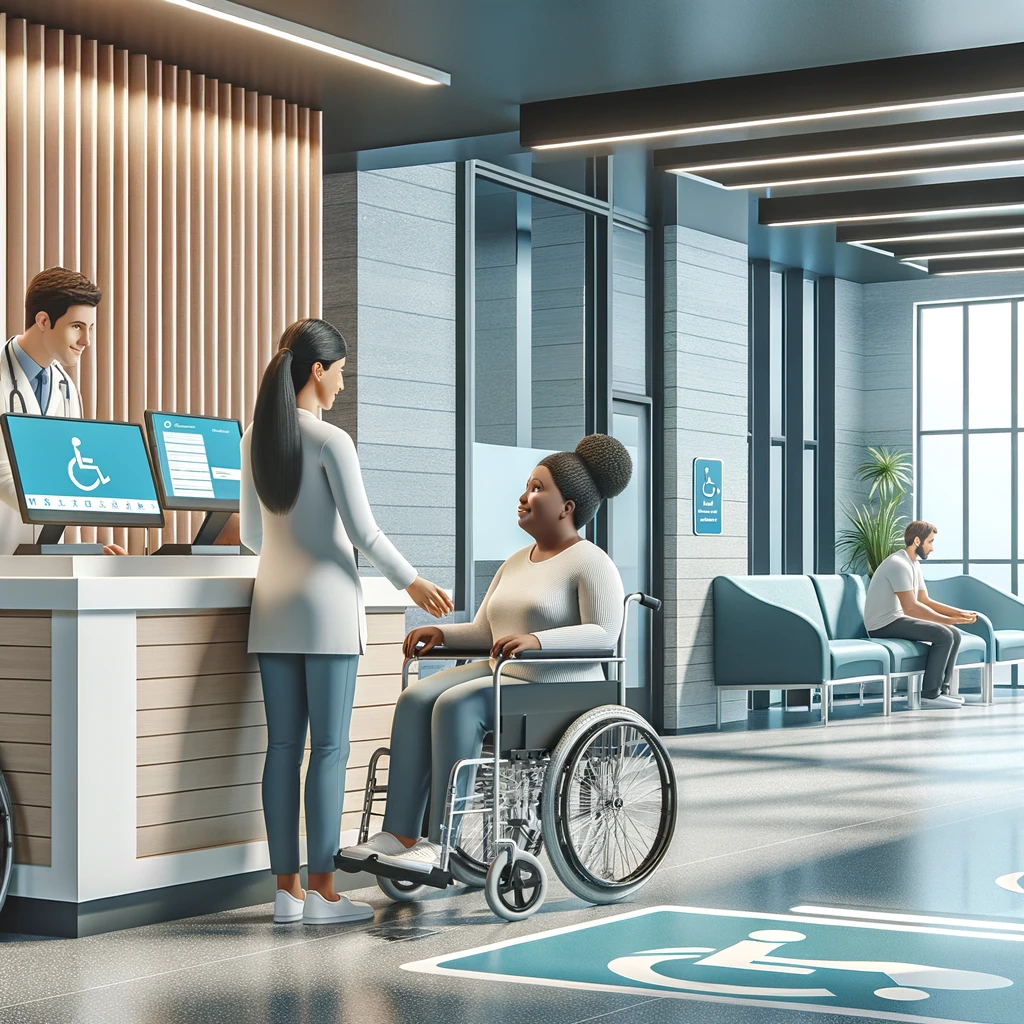
The Americans with Disabilities Act (ADA) of 1990 is a cornerstone in the fight for civil rights, providing broad anti-discrimination protections to individuals with disabilities. This landmark legislation ensures that people with disabilities have equal access to all areas of public life, including jobs, schools, transportation, and all public and private places open to the general public. For healthcare facilities, ADA compliance is not merely a regulatory requirement—it is a moral and ethical imperative to guarantee that all individuals, irrespective of their physical or cognitive abilities, receive equitable care.
In its essence, ADA compliance outlines specific architectural and operational mandates healthcare facilities must follow to be accessible to individuals with disabilities. These mandates cover a wide array of areas, from physical accessibility features like ramps and accessible restrooms to service-oriented guidelines such as effective communication and non-discriminatory policies. Understanding these requirements is crucial for administrators and healthcare professionals who aim to build an inclusive environment.
This comprehensive guide on ADA compliance for healthcare facilities is designed to provide a critical overview of the law’s requirements, best practices for implementation, and the significance of creating accessible healthcare environments. By delving into various sections, we will offer insights into the nuanced application of ADA standards in healthcare settings, including tips for overcoming common challenges and ensuring that facilities meet all required standards.
Regulatory Framework of ADA Compliance
The ADA is structured under five main titles, each addressing different aspects of public life. Specifically, Titles II and III are most relevant to healthcare facilities. Title II applies to public entities, including state and local governments, which encompasses public hospitals and clinics. Title III pertains to private entities involved in public accommodations and services, which includes private healthcare providers.
Compliance under these titles involves both structural modifications and procedural adjustments. Under Title II, public healthcare facilities must ensure that newly constructed and altered facilities comply with ADA standards for accessible design. For existing buildings, facilities must ensure accessibility to the “maximum extent feasible,” which often means making reasonable modifications.
Title III mandates that private healthcare providers remove architectural barriers in existing facilities when it is “readily achievable,” which means accomplishing it without much difficulty or expense. Reasonable modifications in policies, practices, and procedures must also be made unless these modifications fundamentally alter the nature of the services provided.
Furthermore, both titles underscore the importance of effective communication. Healthcare facilities must provide auxiliary aids and services, such as sign language interpreters or written materials in accessible formats, to ensure effective communication with patients who have disabilities. Failure to comply with these requirements can lead to significant penalties, including fines and loss of federal funding.
ADA Accessibility Standards in Healthcare Facilities
To achieve ADA compliance, healthcare facilities must adhere to the ADA Standards for Accessible Design. These standards provide detailed requirements for various structural and non-structural elements to ensure accessibility for individuals with disabilities. Key areas covered by these standards include:
- Entrances and Exits: Must be accessible, with ramps or lifts provided where needed. Doors must have adequate width and be easy to open.
- Parking Facilities: Accessible parking spaces must be provided, with proper signage, size, and location near accessible entrances.
- Restrooms: Must have accessible stalls, sinks, and other facilities that accommodate wheelchair users and individuals with other disabilities.
- Patient Rooms: At least one accessible room must be provided for patients, equipped with necessary features like lowered counters and grab bars.
- Exam Rooms and Medical Equipment: Exam tables, chairs, and other medical equipment must be accessible to patients with disabilities.
Moreover, pathways within the facility must be kept clear and navigable. Signage must be present throughout the facility, utilizing Braille and other accessible formats. Elevators, where necessary, should be functional and equipped with accessible features like tactile buttons and audible signals.

Effective Communication and Customer Service
Effective communication is a cornerstone of ADA compliance in healthcare settings. The goal is to ensure that all patients, regardless of disability, can communicate effectively with healthcare providers. This encompasses patients who are deaf or hard of hearing, blind or have low vision, have speech disabilities, or cognitive impairments.
Healthcare facilities must provide appropriate auxiliary aids and services, which may include qualified interpreters, written materials in accessible formats, captioning services, assistive listening devices, and other tools. These resources ensure that patients fully understand their medical conditions, treatment options, and other pertinent information.
Training staff to interact appropriately with patients with disabilities is equally critical. This includes understanding how to use accessible equipment, recognizing when auxiliary aids are needed, and being aware of the legal requirements. Staff should also be trained to treat patients with disabilities with the same level of respect and dignity afforded to all patients.
Incorporating these practices not only enhances patient satisfaction and safety but also fosters an inclusive environment that abides by ADA regulations and standards.
Overcoming Common Challenges in ADA Implementation
Implementing ADA compliance in healthcare facilities can pose several challenges, ranging from financial constraints to a lack of awareness or training. However, understanding these obstacles and developing strategies to address them is crucial.
Financial Constraints: Upgrading a facility to meet ADA standards can be expensive. However, financial assistance and tax incentives are available for businesses aiming to improve accessibility. Planning and prioritizing modifications can also help in managing costs effectively.
Awareness and Training: A significant barrier to effective ADA compliance is the lack of knowledge among healthcare providers. Conducting regular training sessions and workshops can help build awareness and keep staff updated on compliance requirements.
Lack of Resources: Smaller healthcare facilities may struggle with the availability of resources. Partnering with local organizations or utilizing community programs can provide the necessary support and services.
Resistance to Change: Sometimes, resistance from management or staff can impede ADA compliance efforts. Demonstrating the legal implications and the benefits of an inclusive environment can help mitigate this resistance.
Overcoming these challenges requires a proactive approach, continuous education, and a commitment to creating a truly inclusive healthcare environment.
The Role of Technology in Enhancing ADA Compliance
Technology plays a pivotal role in advancing ADA compliance in healthcare facilities. From telehealth services to digital accessibility tools, innovations provide new avenues for ensuring that patients with disabilities receive equitable care.
Telehealth Services: The rise of telehealth has made medical consultations more accessible, especially for individuals with mobility issues. Ensuring that telehealth platforms are ADA-compliant involves providing captioning, screen reader support, and ensuring that interfaces are navigable.
Digital Accessibility Tools: Websites and online resources used by healthcare facilities must be accessible. This includes providing text alternatives for images, ensuring website navigation is keyboard-friendly, and using accessible PDF formats. Regular audits can help identify and rectify accessibility issues.
Innovative Assistive Technology: Tools like speech-to-text programs, text-to-speech readers, and other assistive technologies can significantly enhance communication for patients with disabilities. Implementing these technologies within healthcare settings promotes inclusivity.
Embracing these technological advancements not only ensures compliance but also enriches the patient experience, enabling healthcare providers to deliver superior care to all individuals.
Conclusion
The Americans with Disabilities Act has sparked significant positive changes in creating more inclusive and equitable environments across various sectors, including healthcare. Ensuring ADA compliance in healthcare facilities is not just about meeting legal mandates but about honoring the principle of equality and dignity for all patients, regardless of their disabilities.
By understanding and implementing the ADA’s comprehensive guidelines, healthcare facilities can make significant strides in accessibility. This involves adopting ADA Standards for Accessible Design, enhancing communication through auxiliary aids and services, and training staff to provide exemplary service to patients with disabilities.
Overcoming the hurdles associated with ADA compliance, such as financial constraints and lack of awareness, requires a committed and informed approach. Utilizing available resources, embracing technology, and fostering an inclusive culture within healthcare settings can help address these challenges effectively.
Moving forward, healthcare facilities must continuously evaluate and improve their practices to stay compliant with ADA requirements. The ultimate goal is to cultivate an environment where every individual, regardless of their physical or cognitive abilities, can receive the quality care they deserve.
ADA compliance is an ongoing journey of growth, learning, and improvement. It is about creating a world where access to healthcare is a right enjoyed by all, embodying the spirit of equality at the very heart of medical care.
Frequently Asked Questions
1. What is the main purpose of ADA compliance for healthcare facilities?
The Americans with Disabilities Act (ADA) of 1990 plays a crucial role in eliminating discrimination and ensuring individuals with disabilities have equal access and opportunities throughout different areas of life. In the realm of healthcare, ADA compliance serves multiple purposes. Most importantly, it ensures that individuals with disabilities receive equitable access to healthcare services. This extends beyond basic accessibility features; it involves making sure that the entire healthcare environment—from the physical facilities to the provided services—are designed and delivered in a way that accommodates all individuals’ needs. Compliance ensures that all people can freely access healthcare settings without barriers, which is fundamental to providing inclusive and comprehensive care.
2. What are the key ADA requirements for healthcare facilities?
Healthcare facilities must adhere to a variety of ADA requirements to ensure complete accessibility. These are extensive and cover several aspects of facility operations and infrastructure. To begin with, facilities need to have architectural accessibility. This includes having ramps instead of stairs, appropriate doorway widths, grab bars in restrooms, and elevators in multi-story buildings. Furthermore, facilities must have accessible signage, ideally with Braille, and auditory assistance for those who are visually impaired. Within the realm of communication, there’s a requirement to offer alternative formats for information (such as large print, electronic formats, or audio) and provide communication aids like sign language interpreters or captioning for those with hearing impairments. It’s crucial that healthcare facilities regularly assess and maintain these accessibility accommodations as part of their ongoing commitment to ADA compliance and patient care.
3. How does ADA compliance impact the design and layout of healthcare facilities?
ADA compliance significantly influences the architectural design and interior layout of healthcare facilities, as it requires a careful blend of functionality and accessibility. During the planning and construction of a facility, considerations include ensuring that corridors are sufficiently wide to accommodate wheelchairs and that all equipment is positioned so it is easily accessible to everyone, irrespective of mobility constraints. Waiting rooms, examination rooms, and other patient areas need to be designed to accommodate those who use mobility aids without making them feel isolated or confined. This includes furniture that doesn’t just serve its primary purpose but does so in a way that doesn’t create barriers for individuals with disabilities. Moreover, elevators, escalators, and restrooms must be adequately equipped with the necessary fixtures and layout adjustments. These modifications are substantial and must be an integral part of the facility’s design philosophy to effectively comply with ADA requirements.
4. What roles do staff play in ensuring ADA compliance at healthcare facilities?
Staff members are vital assets in executing and maintaining ADA compliance in healthcare facilities. They are the primary facilitators of a welcoming and accessible environment. Training is key: every staff member should understand the ADA and how it applies to their daily operations. This involves knowing how to operate accessible features, engaging appropriately with patients who have disabilities, and offering additional assistance when necessary. Staff should also be trained to recognize potential barriers and offer solutions promptly. Additionally, they should facilitate effective communication by understanding the specific needs of patients, such as providing information in alternative formats or obtaining necessary communication aids. On an organizational level, staff input is essential for continuous evaluations and improvements in ADA compliance strategies.
5. How can healthcare facilities ensure ongoing ADA compliance?
Maintaining ADA compliance in healthcare facilities is an ongoing process that involves regular evaluations and adjustments. Facilities should conduct periodic accessibility audits to identify areas of improvement and ensure all existing features meet ADA standards. A proactive approach involves staying informed about changes in ADA regulations or emerging best practices in accessibility. This may require collaboration with disability advocates and experts to ensure requirements are met comprehensively. Staff training should be refreshed periodically to incorporate any legal updates or new accessibility technologies. Lastly, patient feedback is invaluable—it not only highlights real-world challenges faced by individuals with disabilities but also guides necessary adjustments to ensure a truly inclusive environment. By embedding accessibility into the fabric of organizational culture, healthcare facilities can safeguard ADA compliance over the long term.